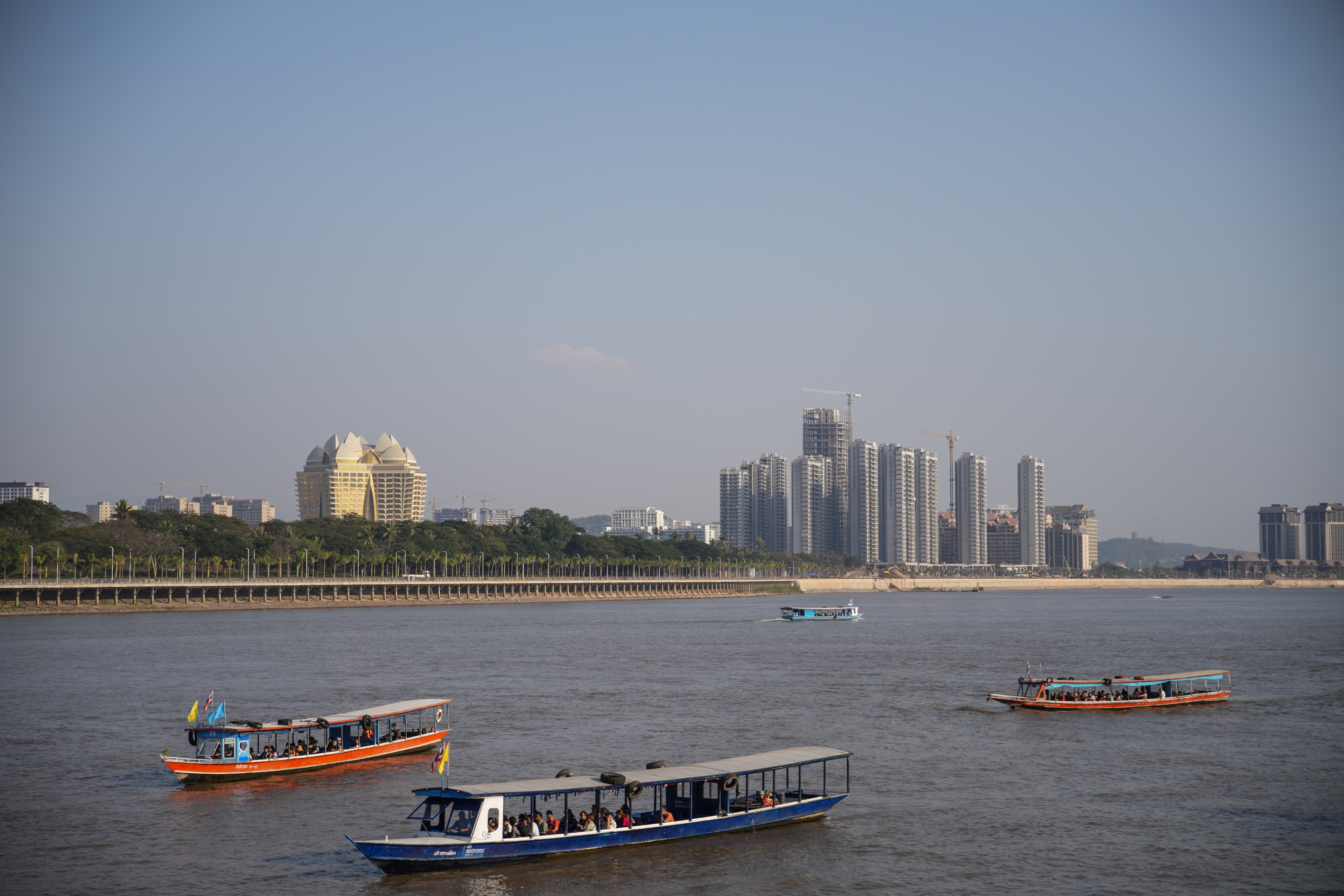
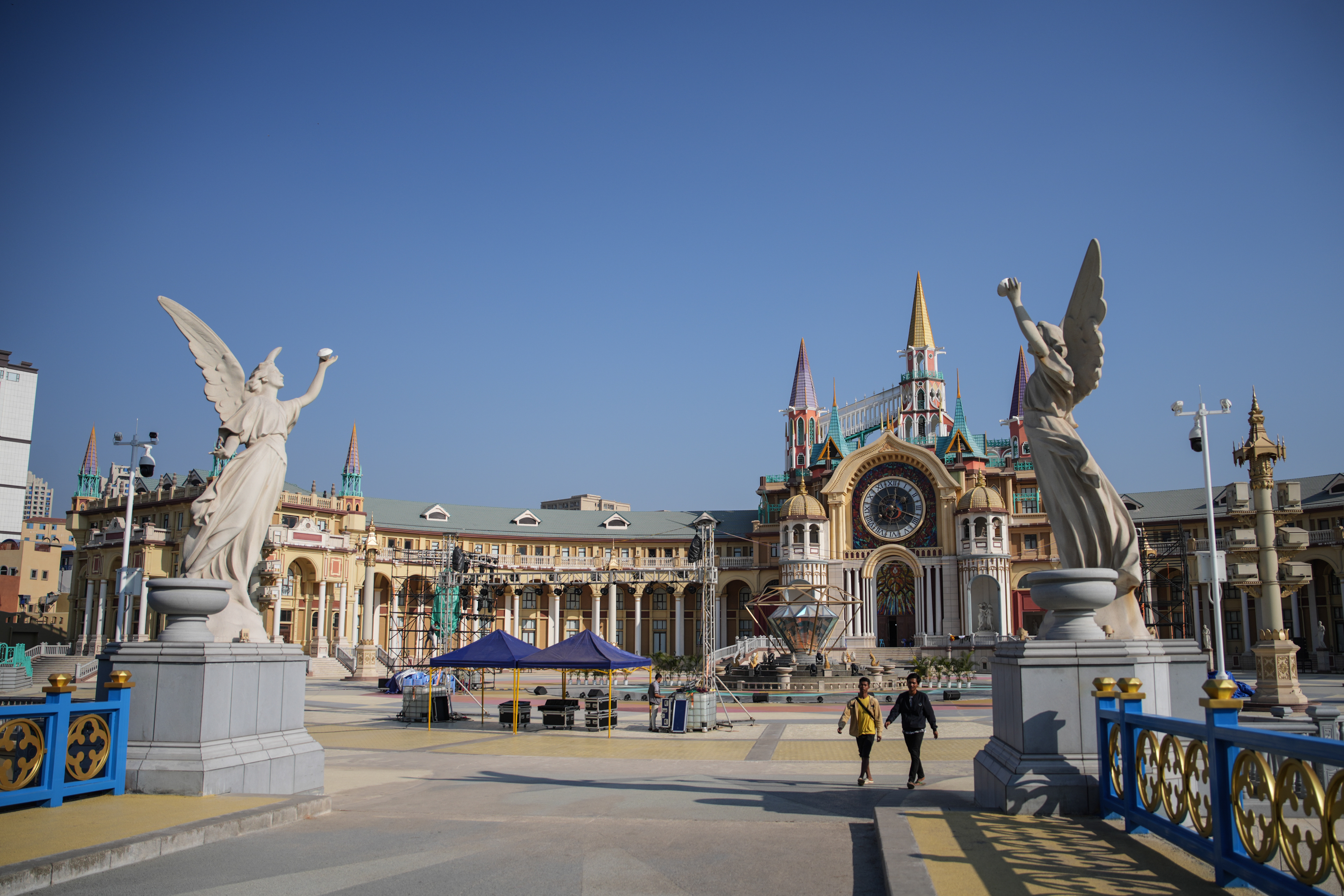
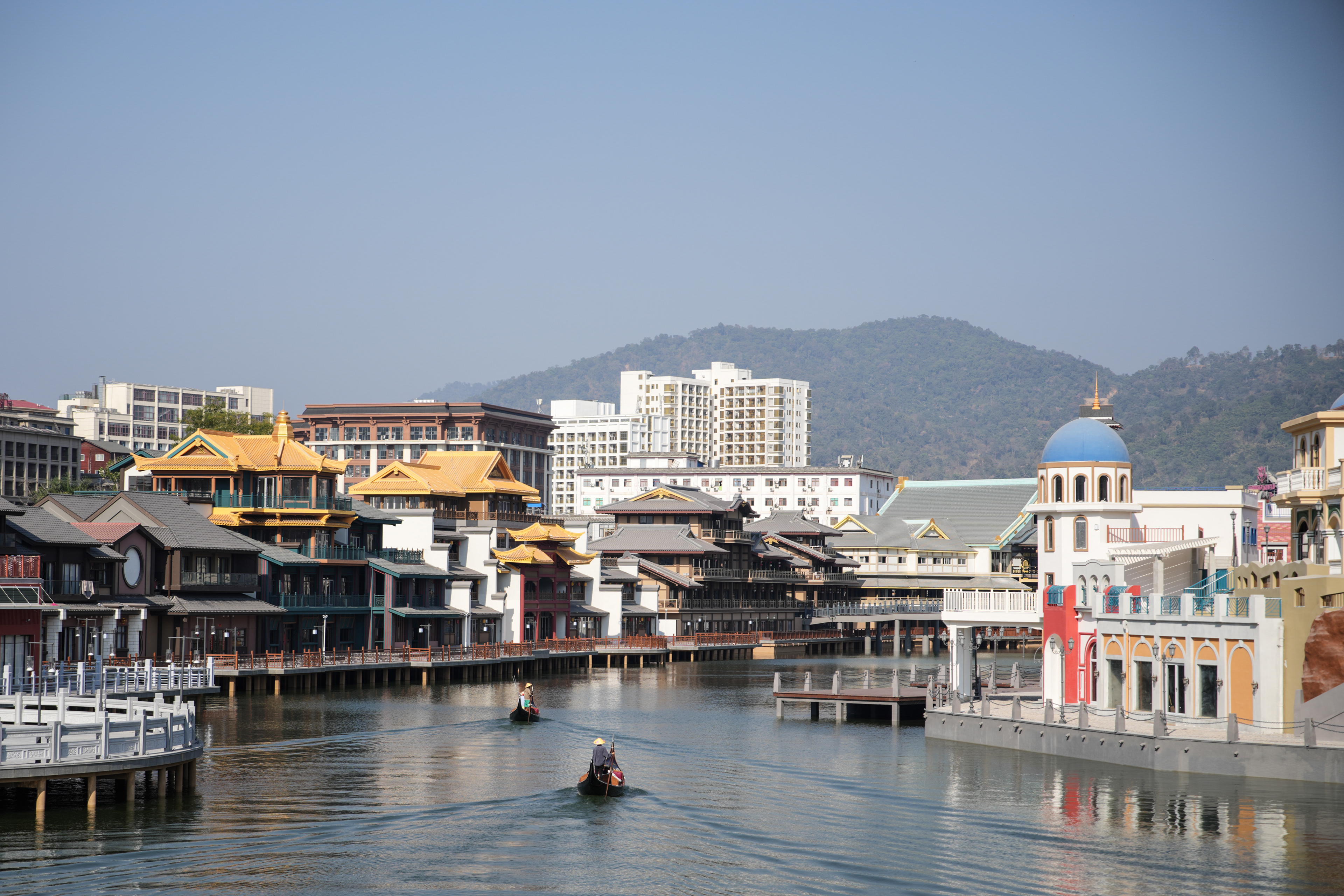
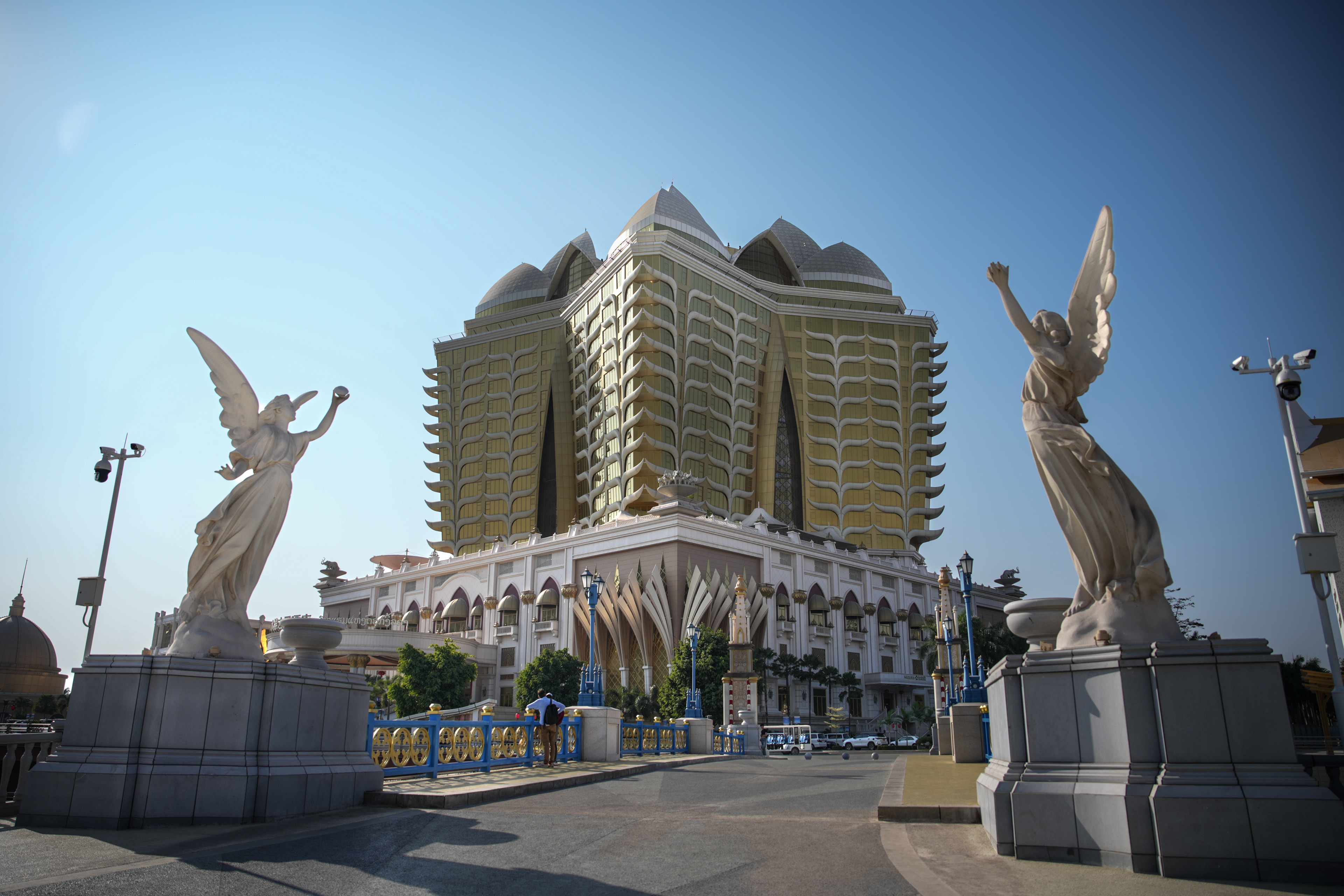
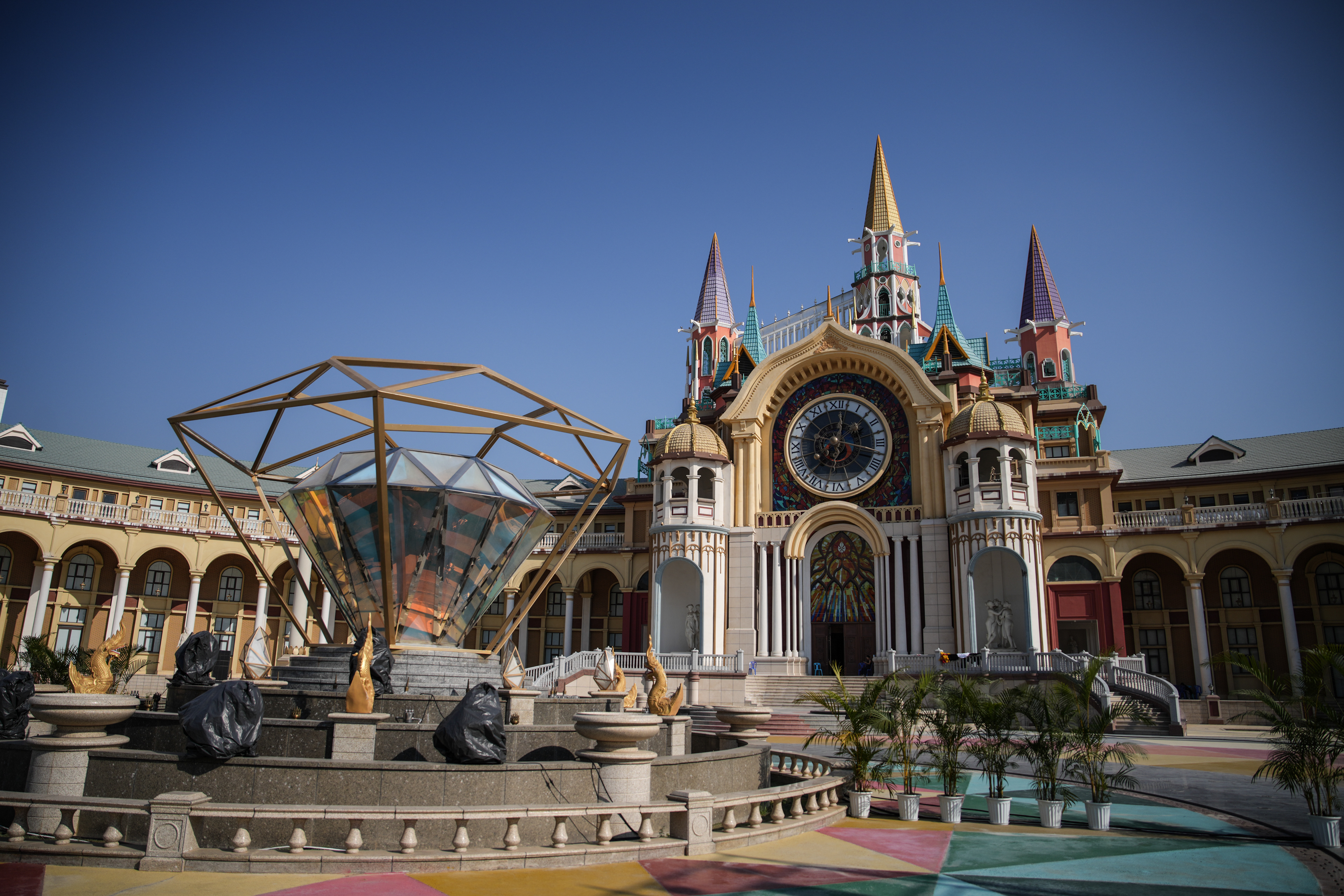
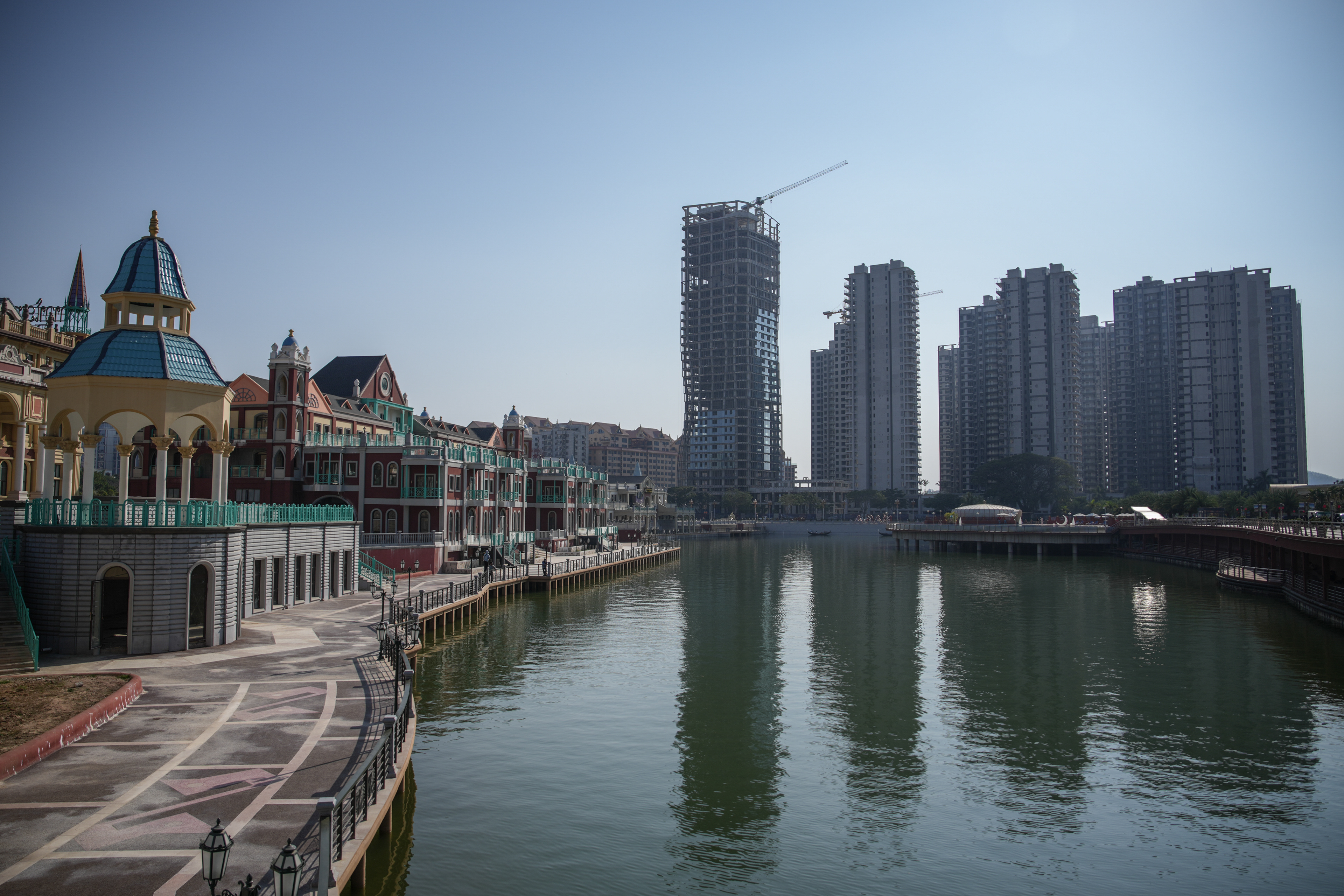
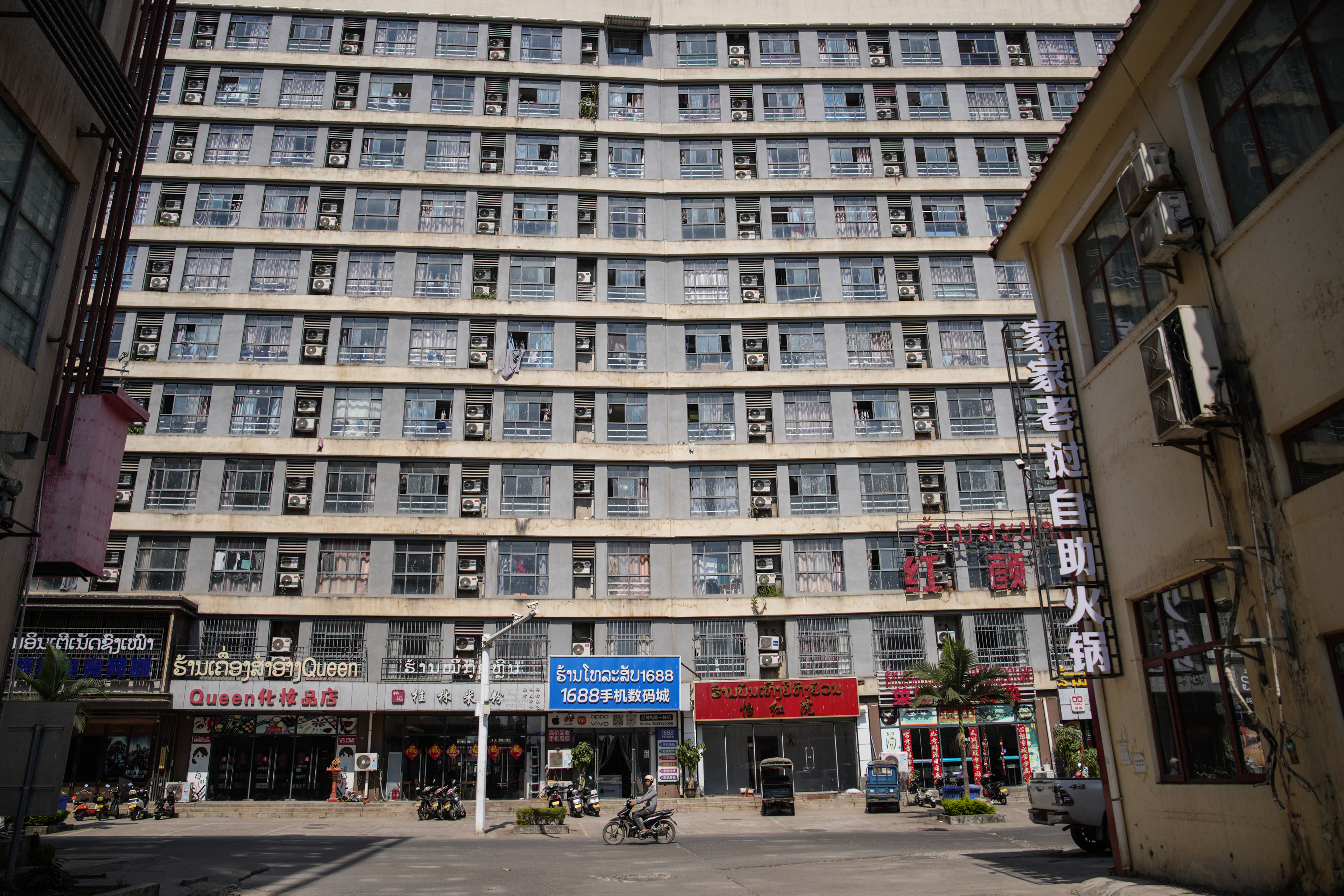
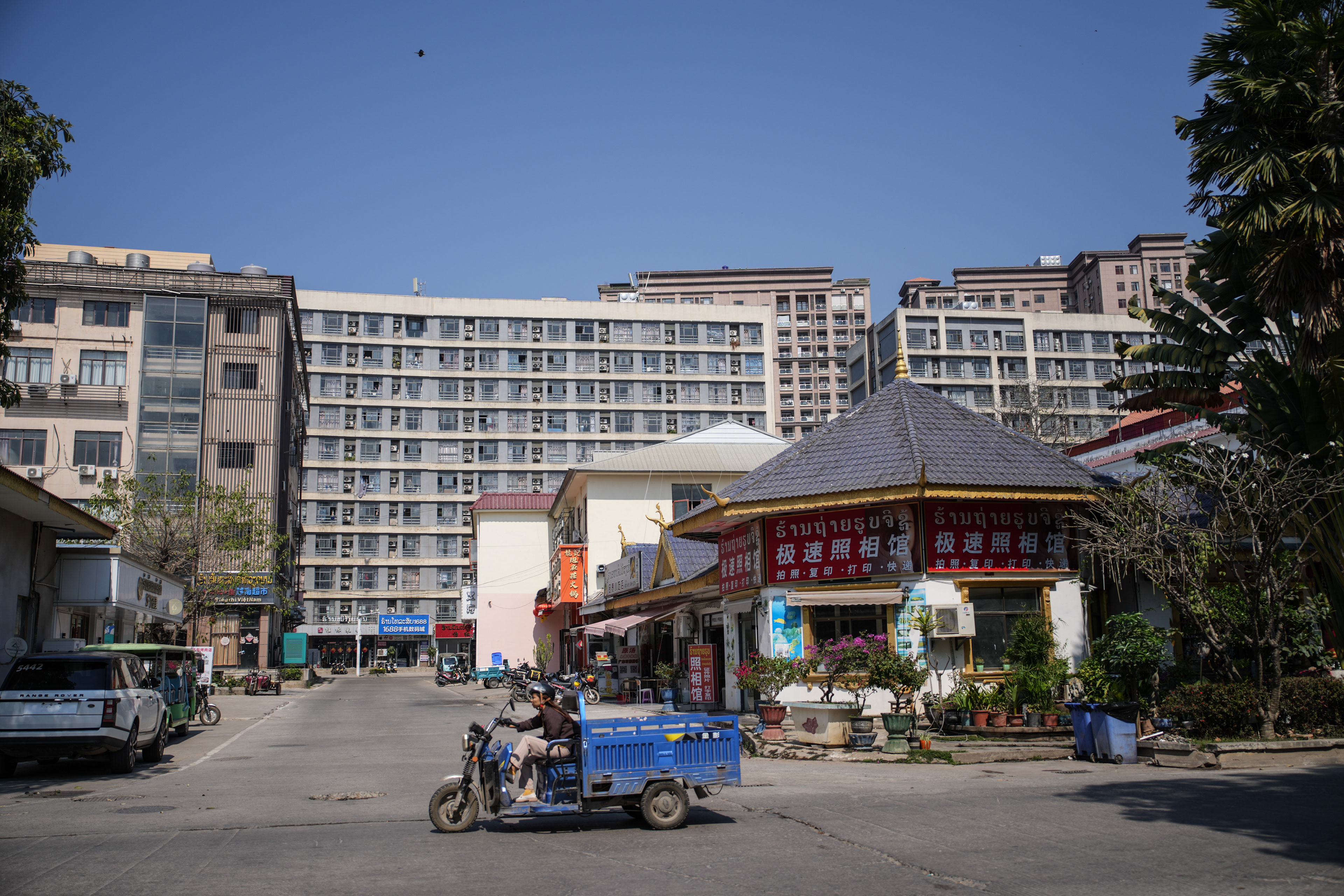
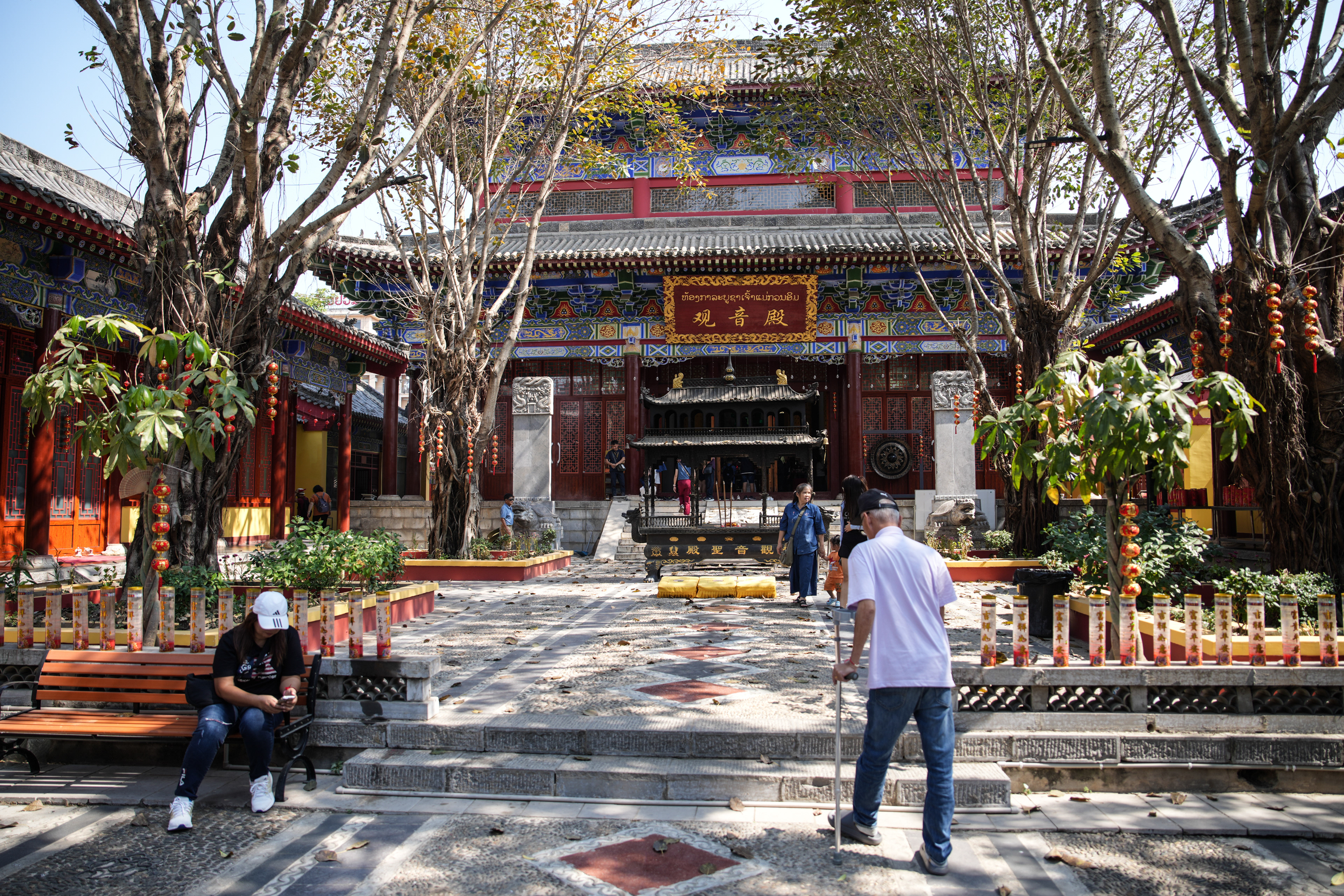
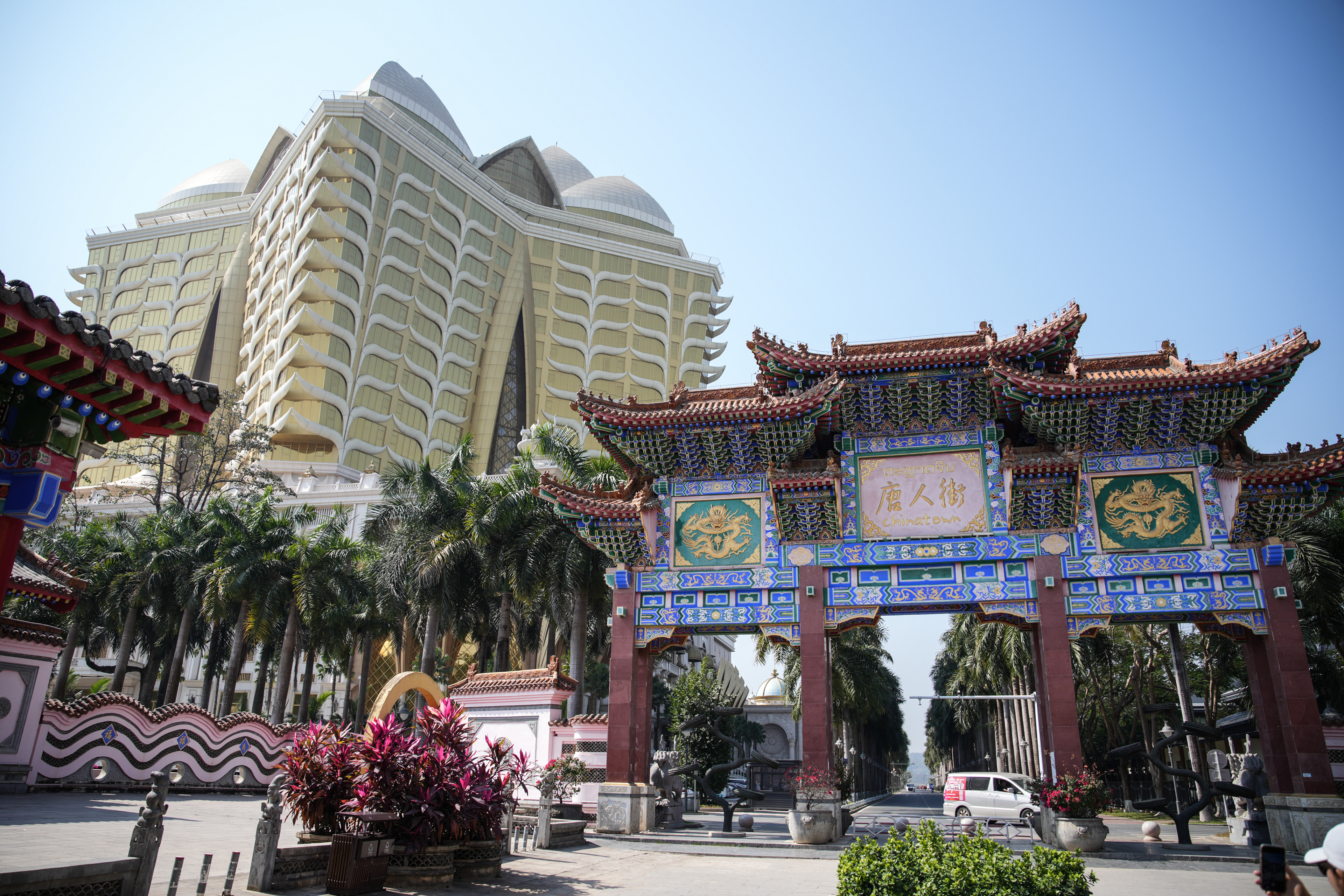
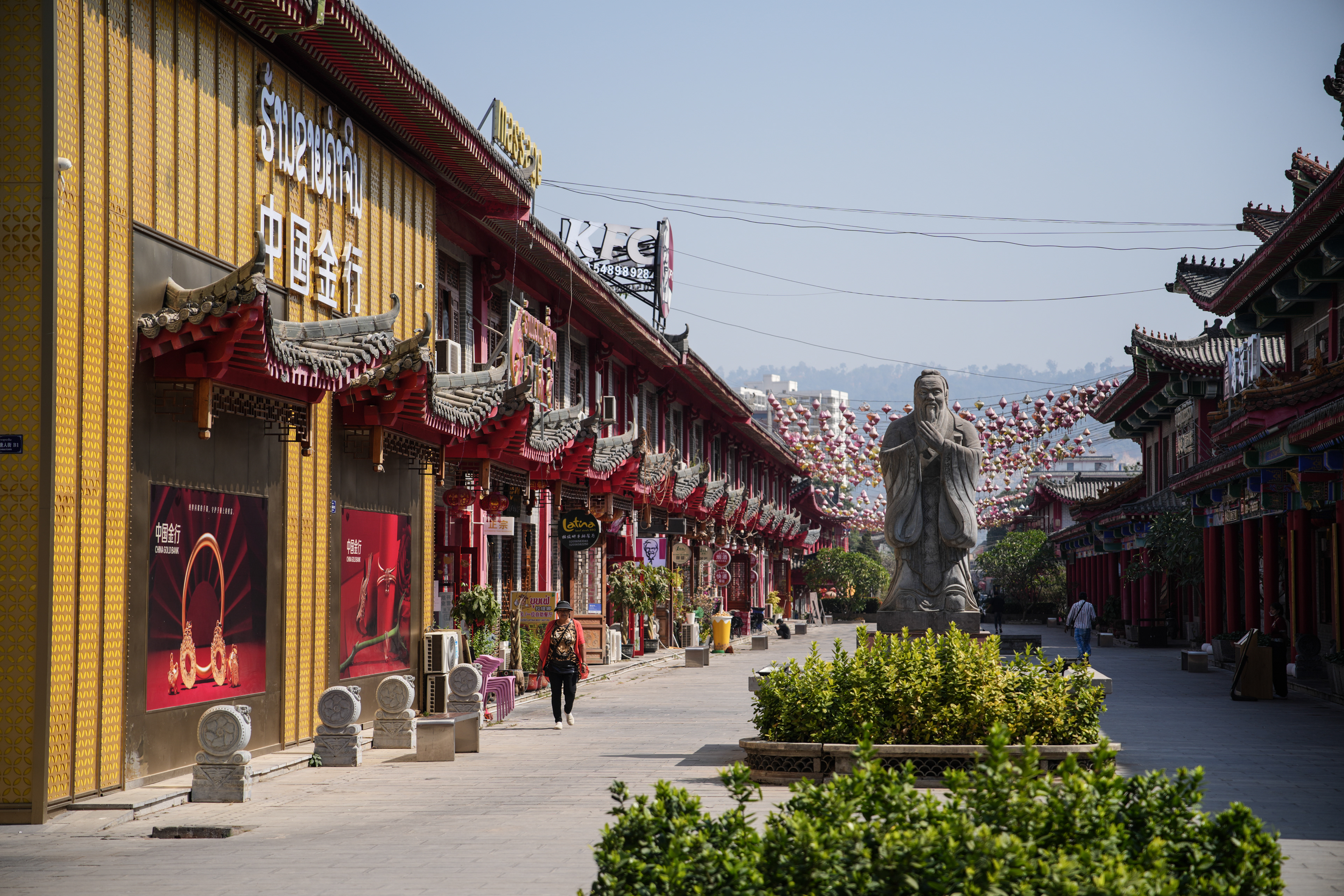
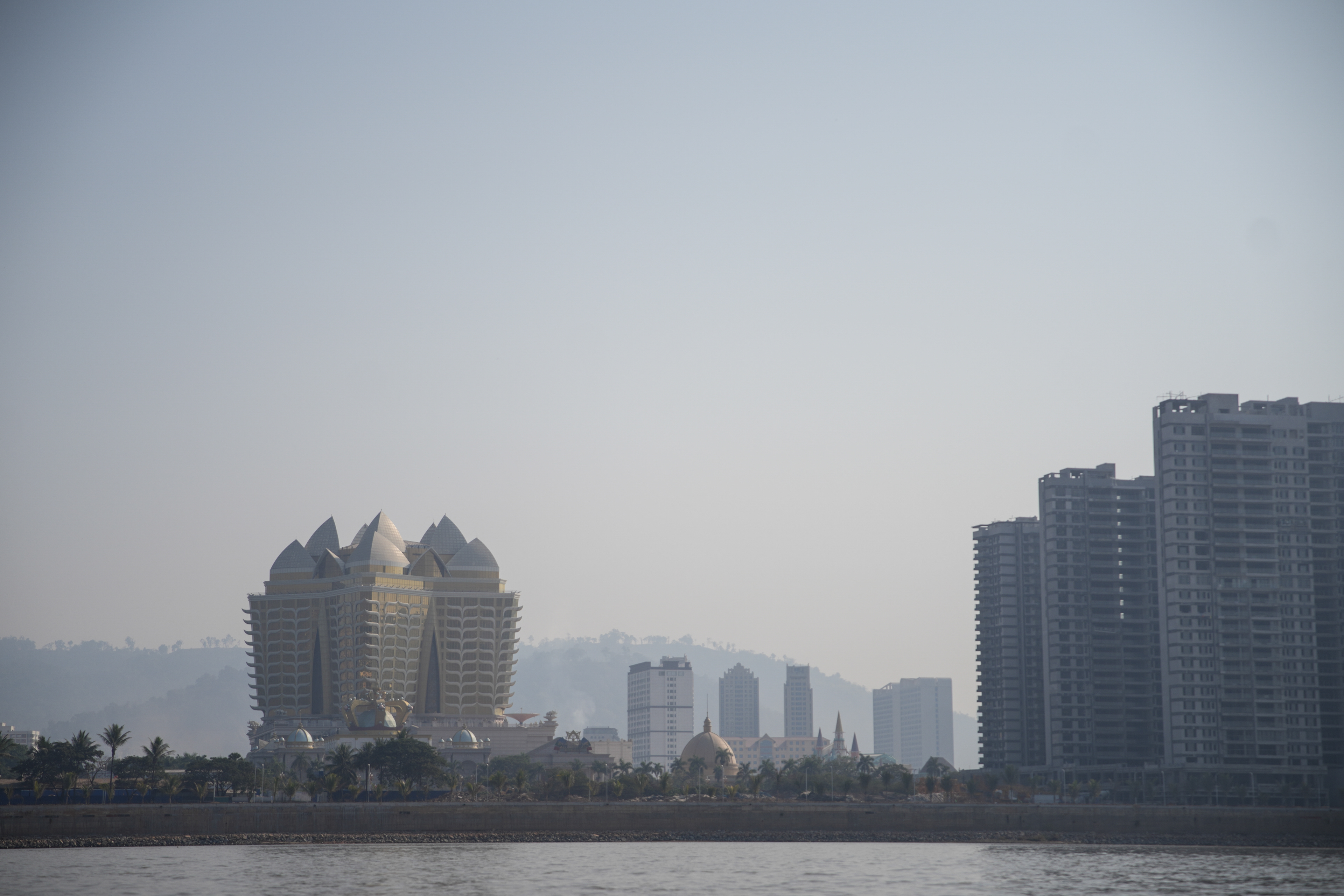
Set along the Mekong River in northern Laos, the Golden Triangle Special Economic Zone has transformed into a tightly controlled enclave built around the Kings Romans Casino. Marketed as a tourism and investment hub, the zone presents a curated image of development, with hotels, casinos, and Chinese-language signage dominating the landscape. Yet behind this façade lies a more opaque reality, where access is restricted, surveillance is constant, and movement is closely monitored. The zone operates with a degree of autonomy that blurs the line between state oversight and private control, raising persistent questions about governance and accountability.
In recent years, the area has drawn increasing attention for its links to transnational scam networks operating across mainland Southeast Asia. Testimonies from workers, intermediaries, and regional observers point to a system where individuals are recruited under false promises of employment and later subjected to coercive conditions. While the operations are dispersed and constantly shifting, the infrastructure within and around the SEZ provides both cover and connectivity, enabling networks to function across borders. The mechanisms are complex, involving layers of brokers, digital platforms, and physical relocation, making them difficult to trace and even harder to document.
This photo essay attempts to navigate that tension between visibility and concealment. It captures fragments of daily life within the zone, the architecture of control, and the subtle traces of a system that remains largely hidden in plain sight. Rather than offering definitive answers, the work reflects on access, limitation, and the challenges of documenting spaces where power operates quietly but decisively.
© Aung Khant Si Thu for Le Figaro Magazine
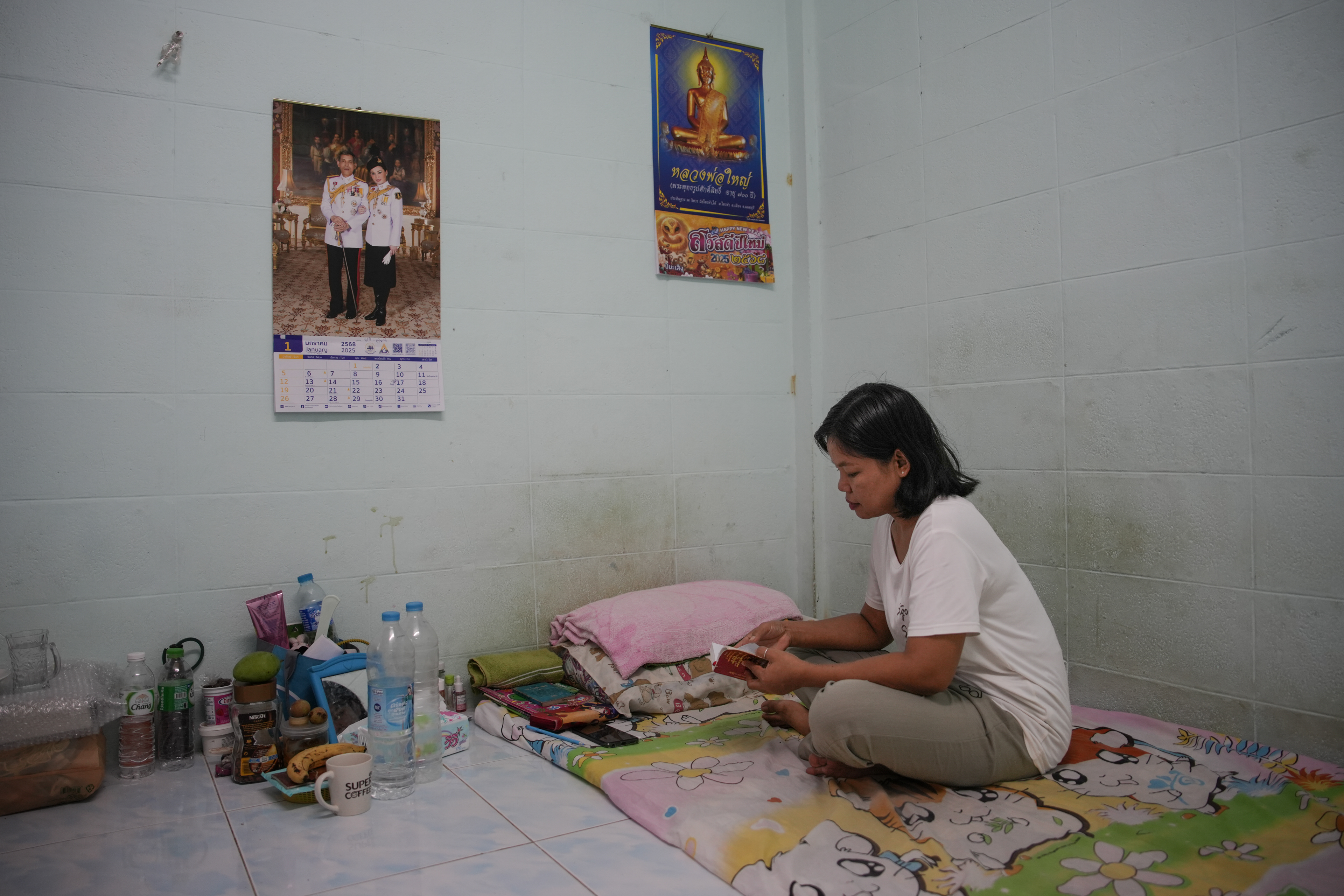
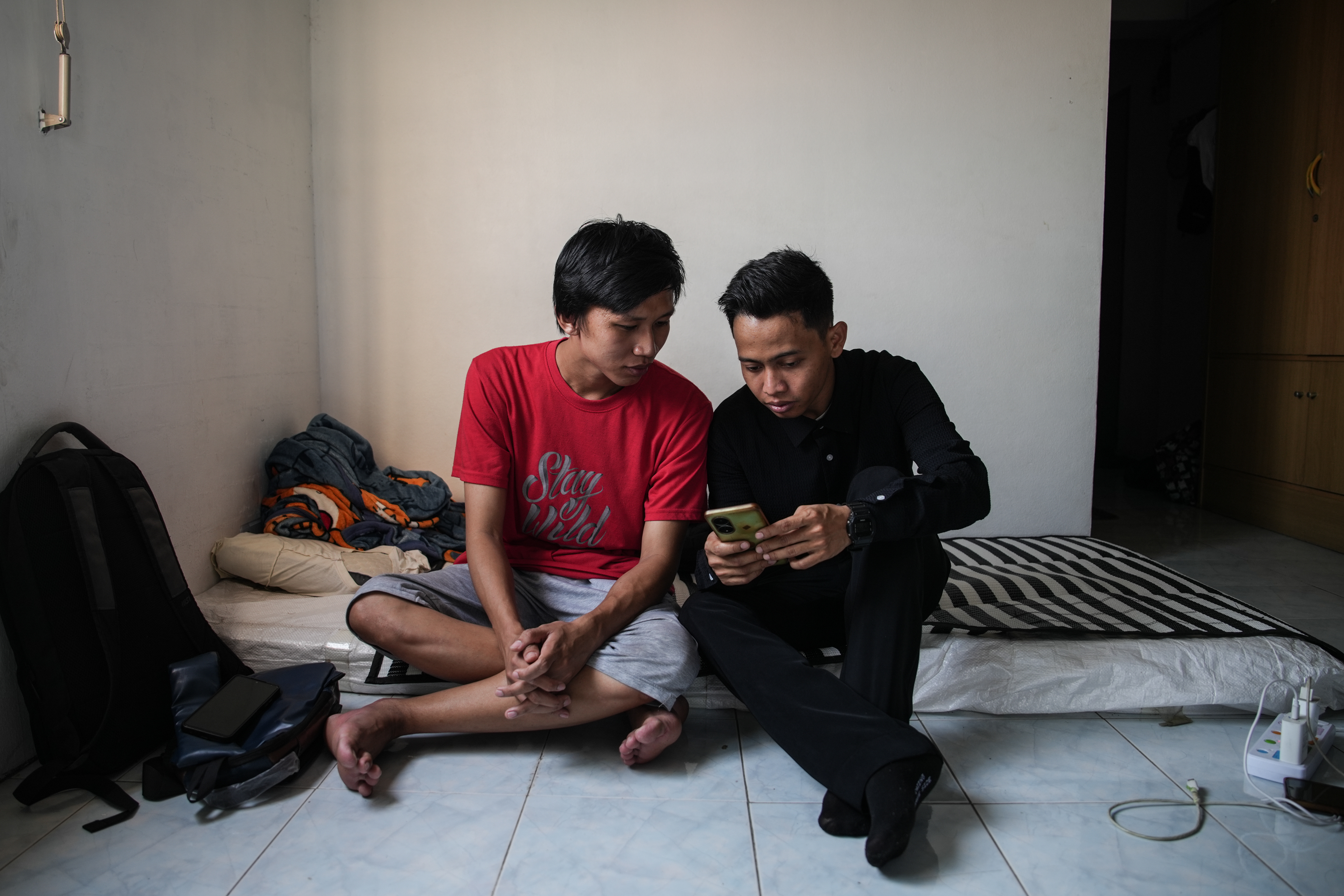
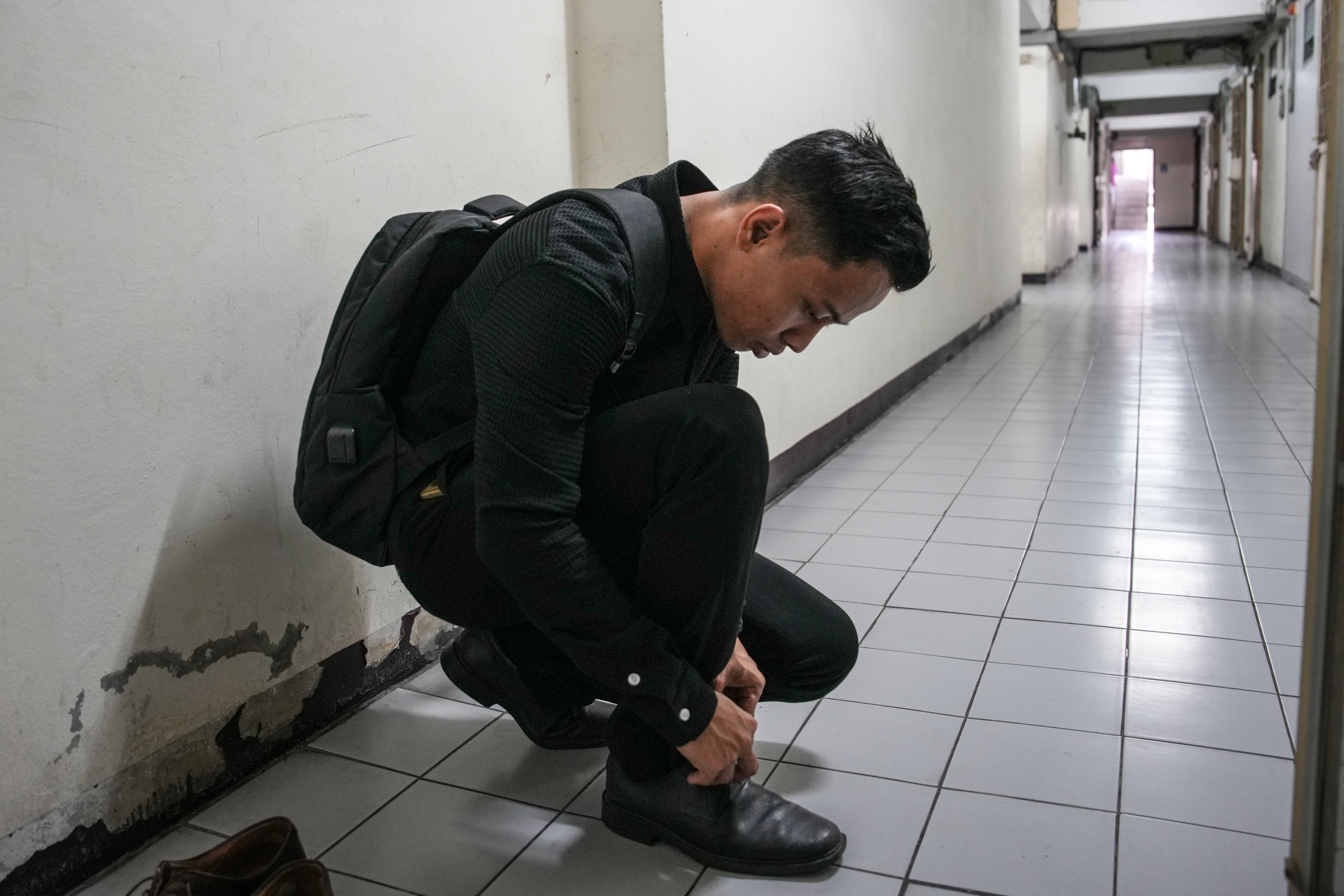
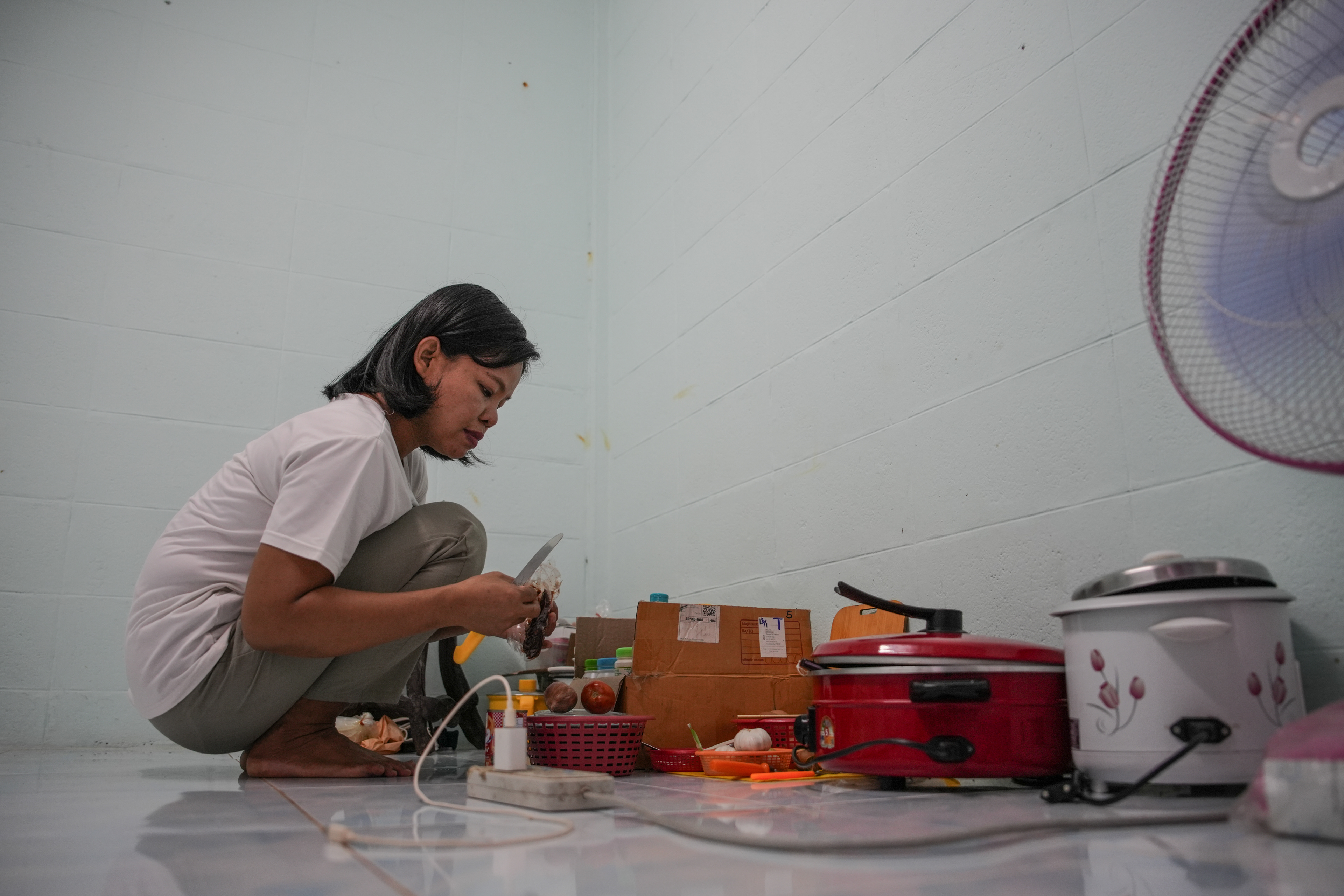
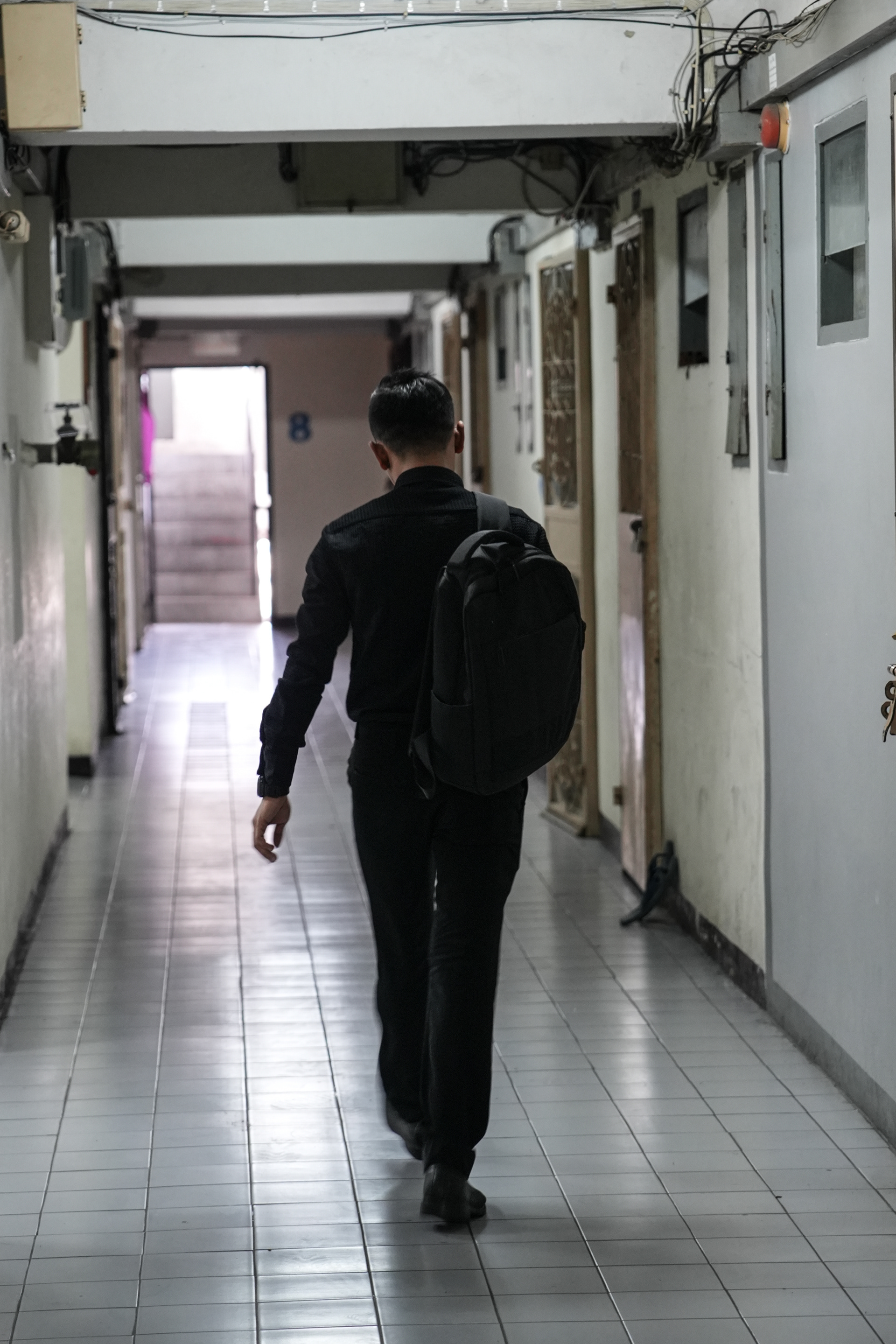
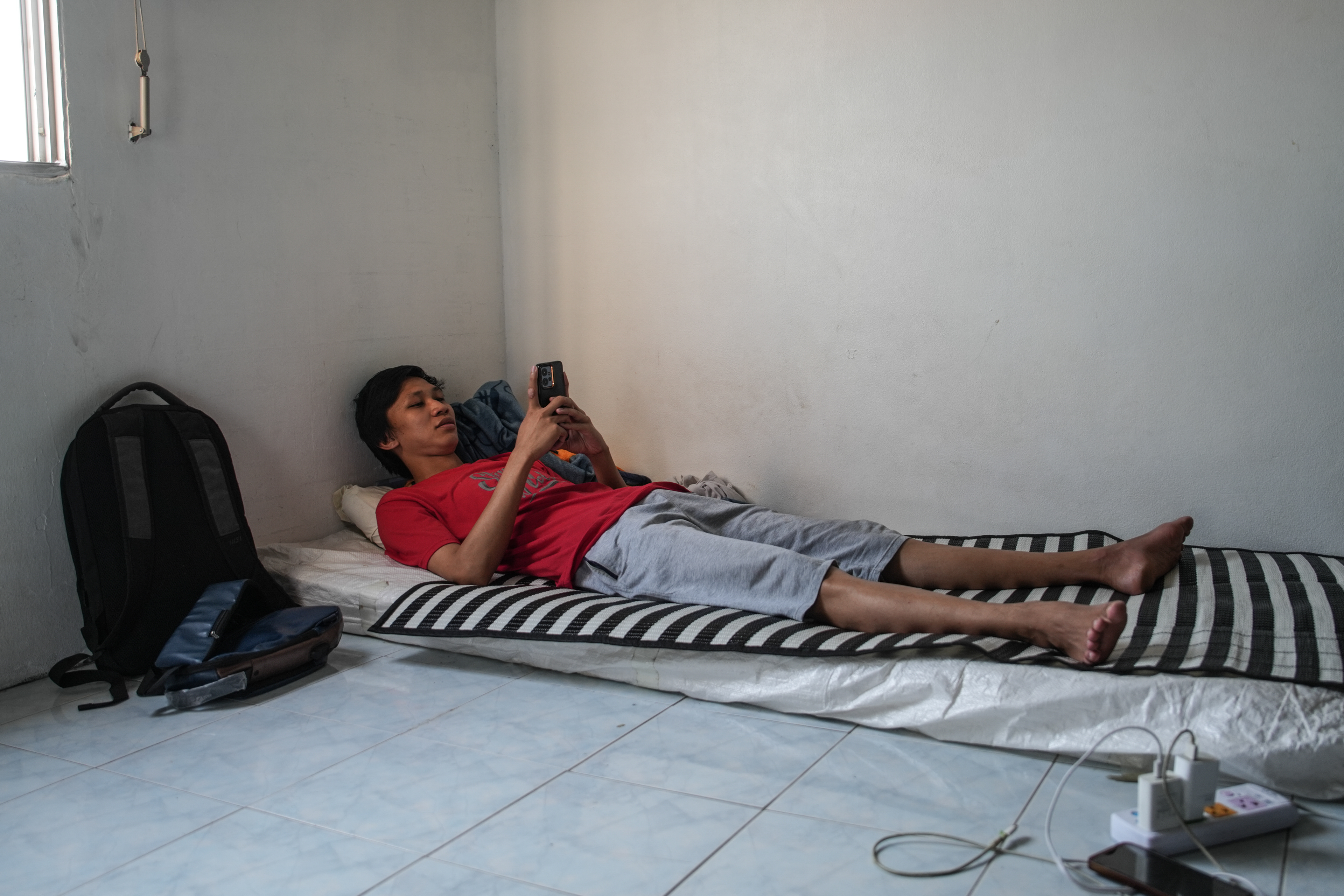
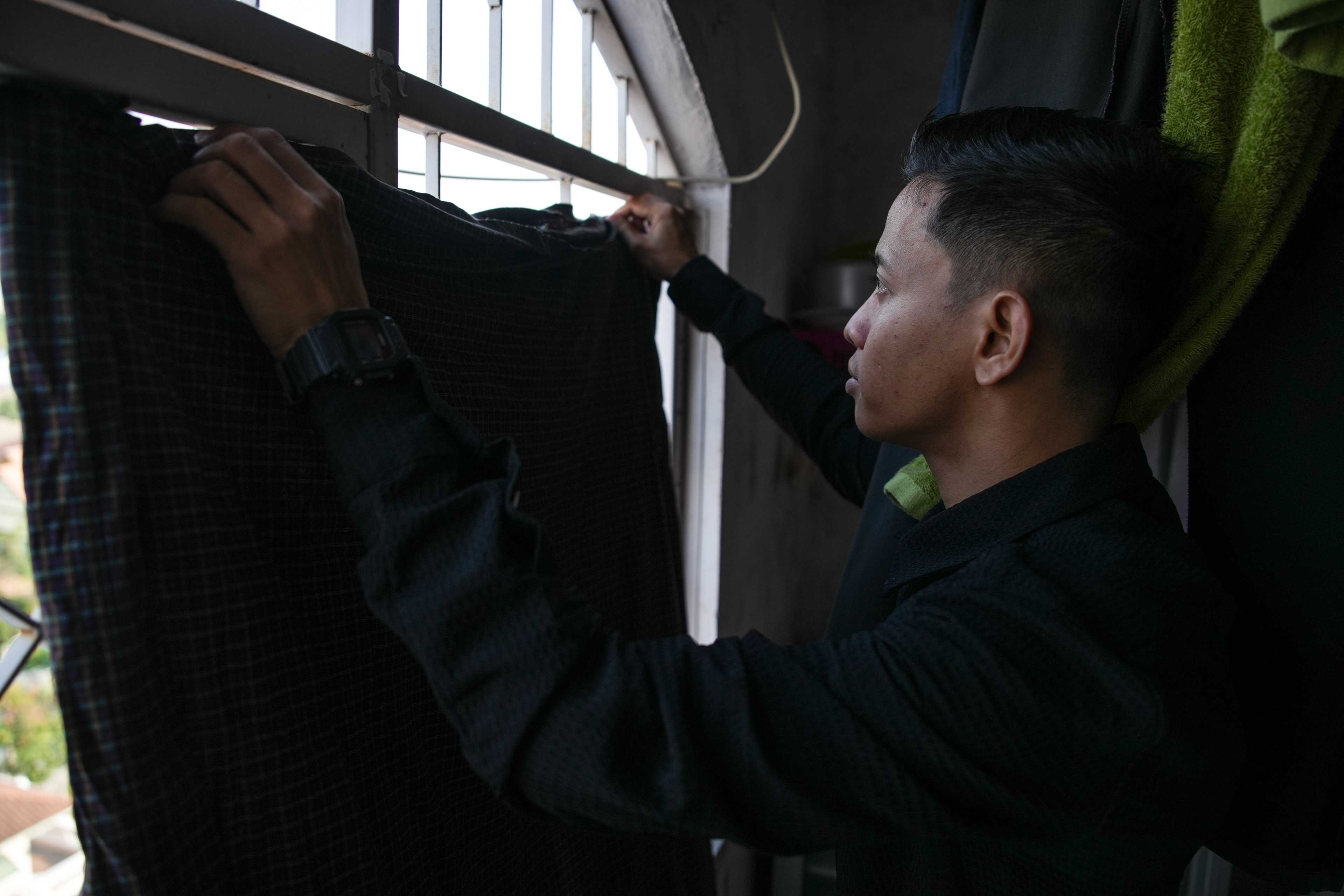
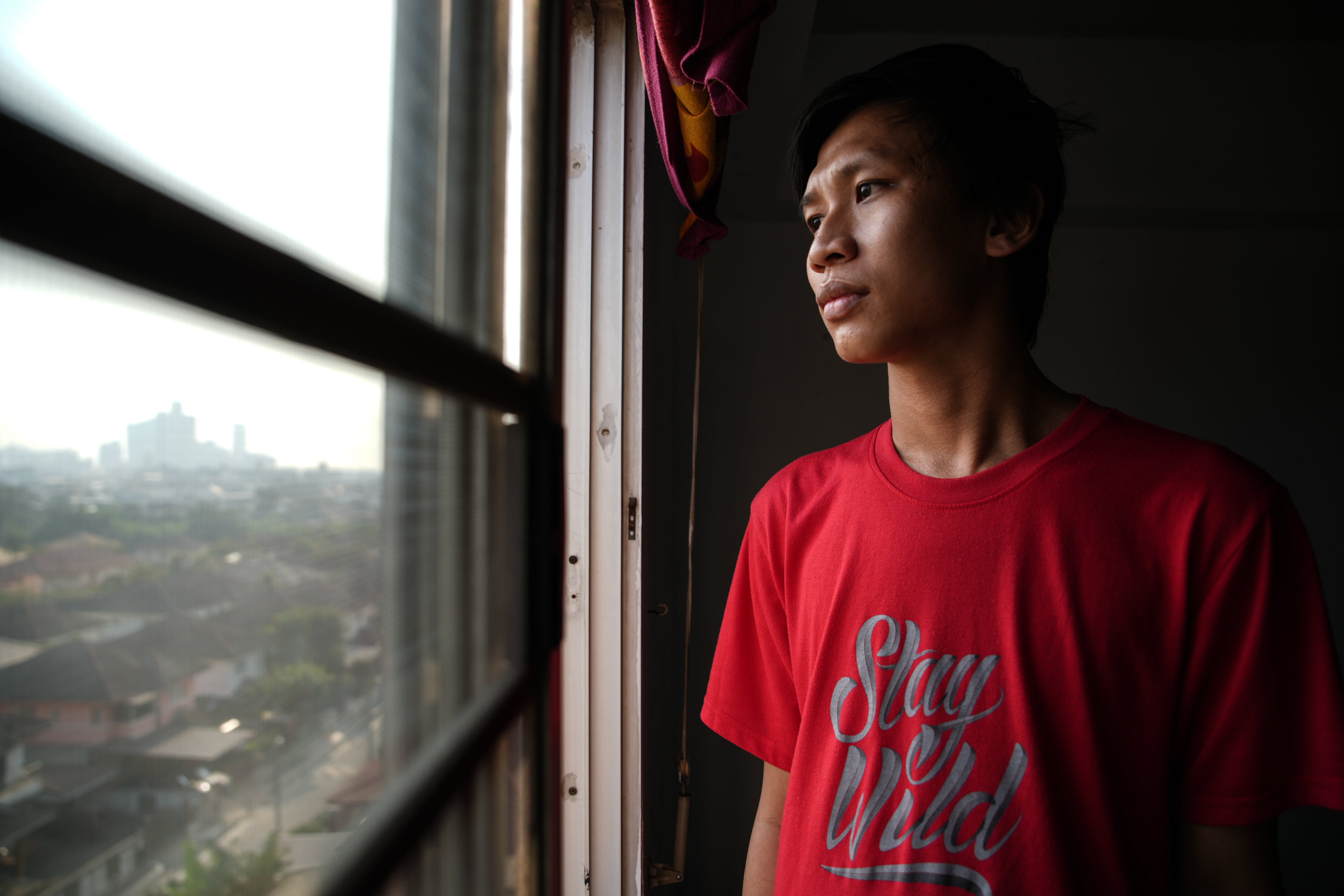
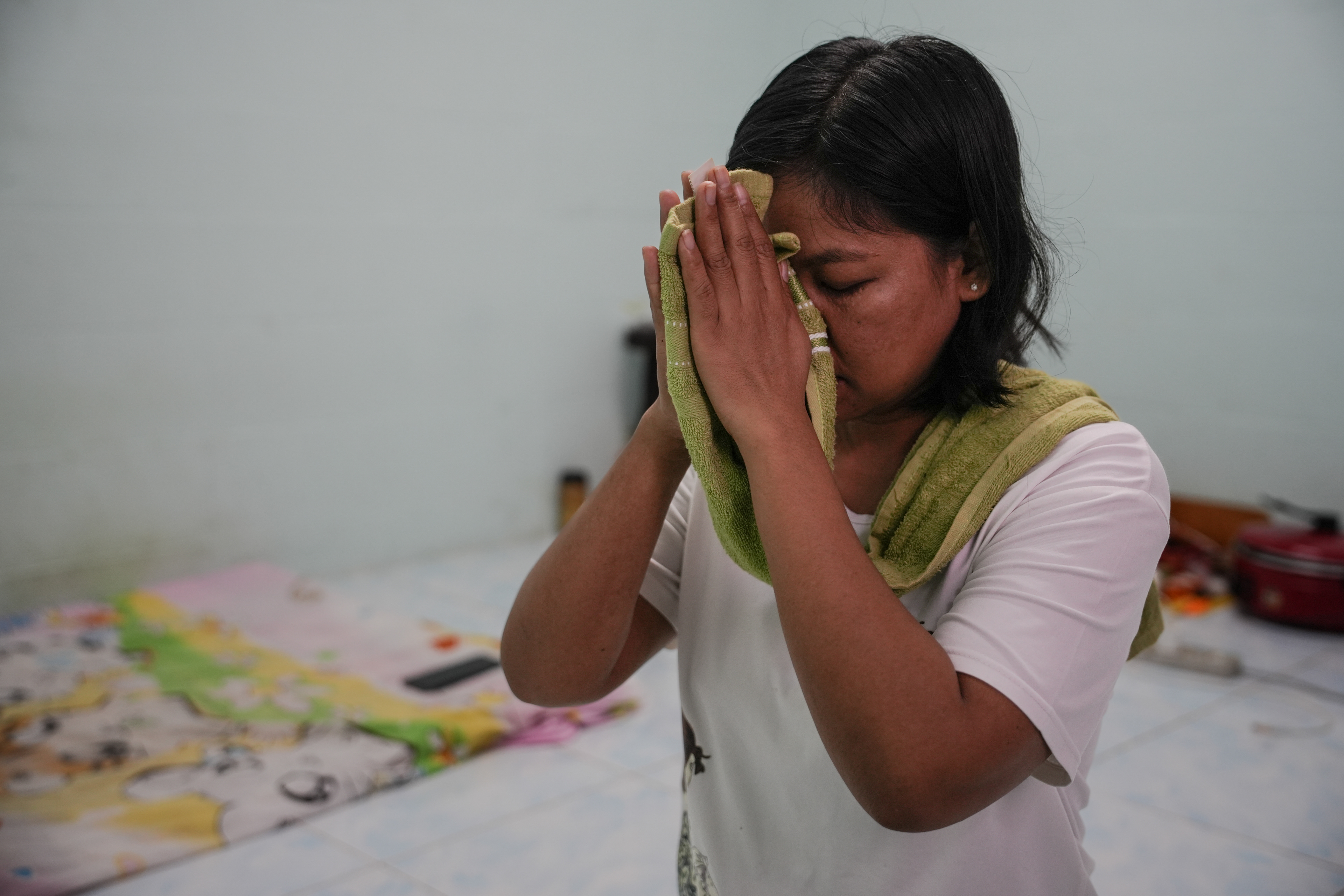
In early 2024, following the announcement of conscription by the Myanmar military, a growing number of young people began leaving their homes in search of safety and certainty. Thailand quickly became a key destination, offering proximity, familiarity, and the possibility of work. Many arrived quietly, crossing borders through informal routes or overland journeys, carrying little more than essential belongings and the weight of an uncertain future. For many, the decision to leave was not driven by opportunity, but by the urgency to avoid being drawn into a conflict they did not choose.
This photo essay follows that movement, capturing moments of transition as young Burmese adapt to life in a new country. Some find work in construction, factories, or service industries, while others remain in a state of waiting, navigating legal, financial, and emotional challenges. Beneath these everyday scenes is a shared sense of displacement, shaped by distance from home and the reality that return is not yet possible. Their journeys reflect a generation caught between survival and hope, redefining what it means to move forward in the face of uncertainty.
© Aung Khant Si Thu for Le Figaro Magazine
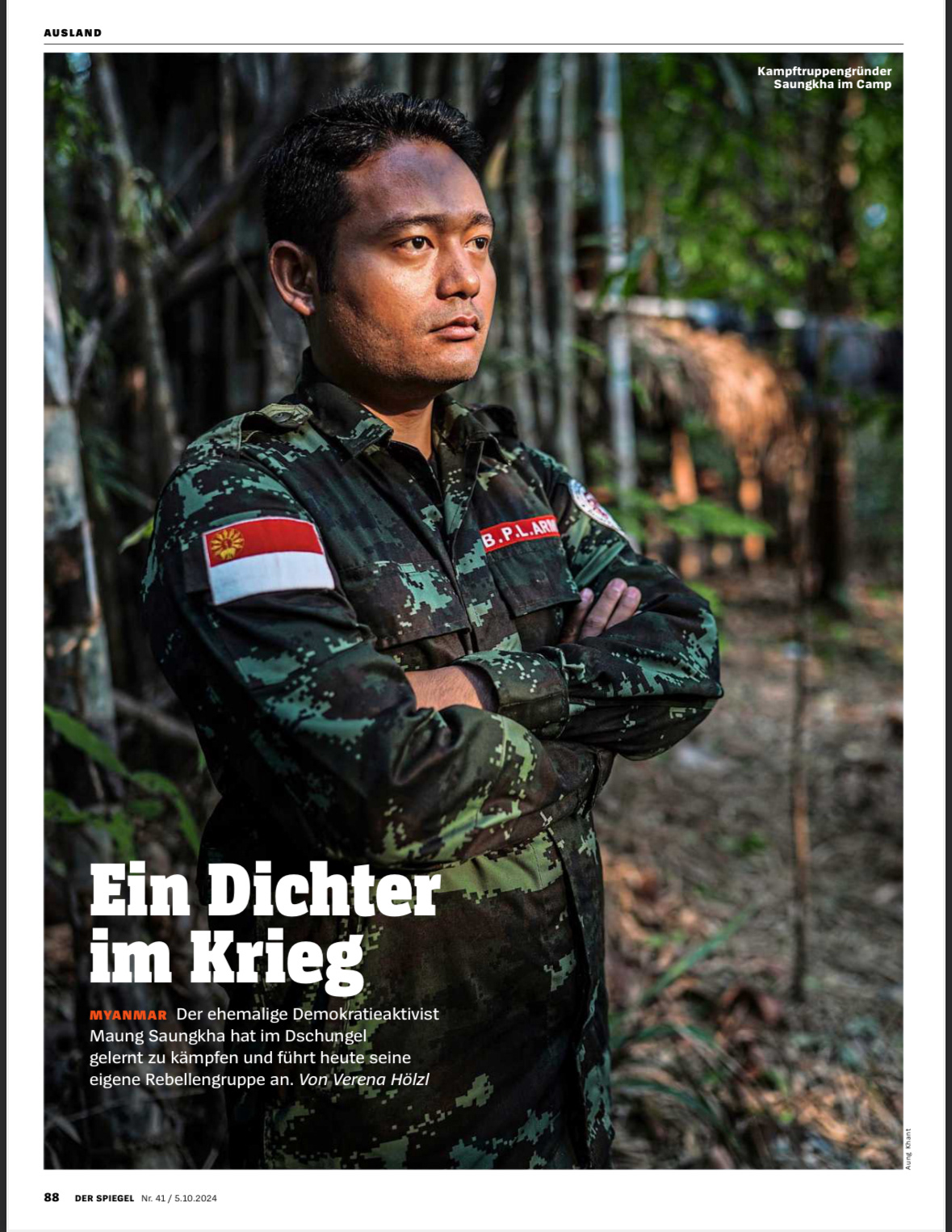
Maung Saungkha, founder and commander of the Burma People’s Liberation Army (BPLA), stands in a forest camp in Myanmar. Once known as a poet and democracy activist, his life shifted dramatically following the 2021 military coup. Like many from his generation, he moved from words to armed resistance, becoming part of a broader movement reshaping the country’s political landscape.
Today, he leads a growing force composed largely of young people who have left behind civilian lives to join the fight against military rule. Under his leadership, the BPLA combines political education with military training, reflecting an effort to build not only a resistance force but a new vision for the country’s future.
His journey from poetry to warfare mirrors the transformation of a generation. In the midst of conflict, figures like Maung Saungkha represent both the cost of the crisis and the determination driving Myanmar’s resistance.
© Aung Khant Si Thu for Der Spiegel
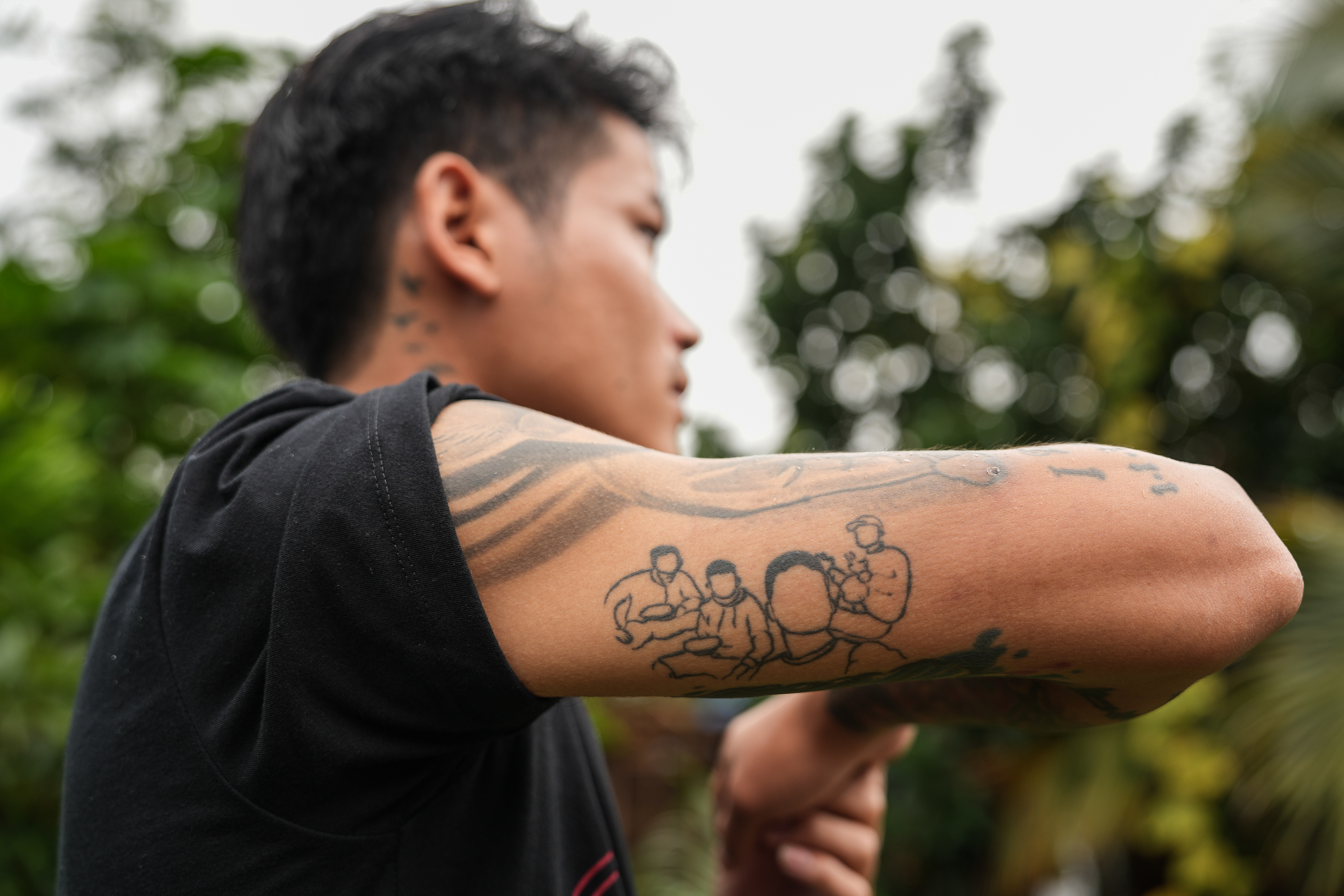
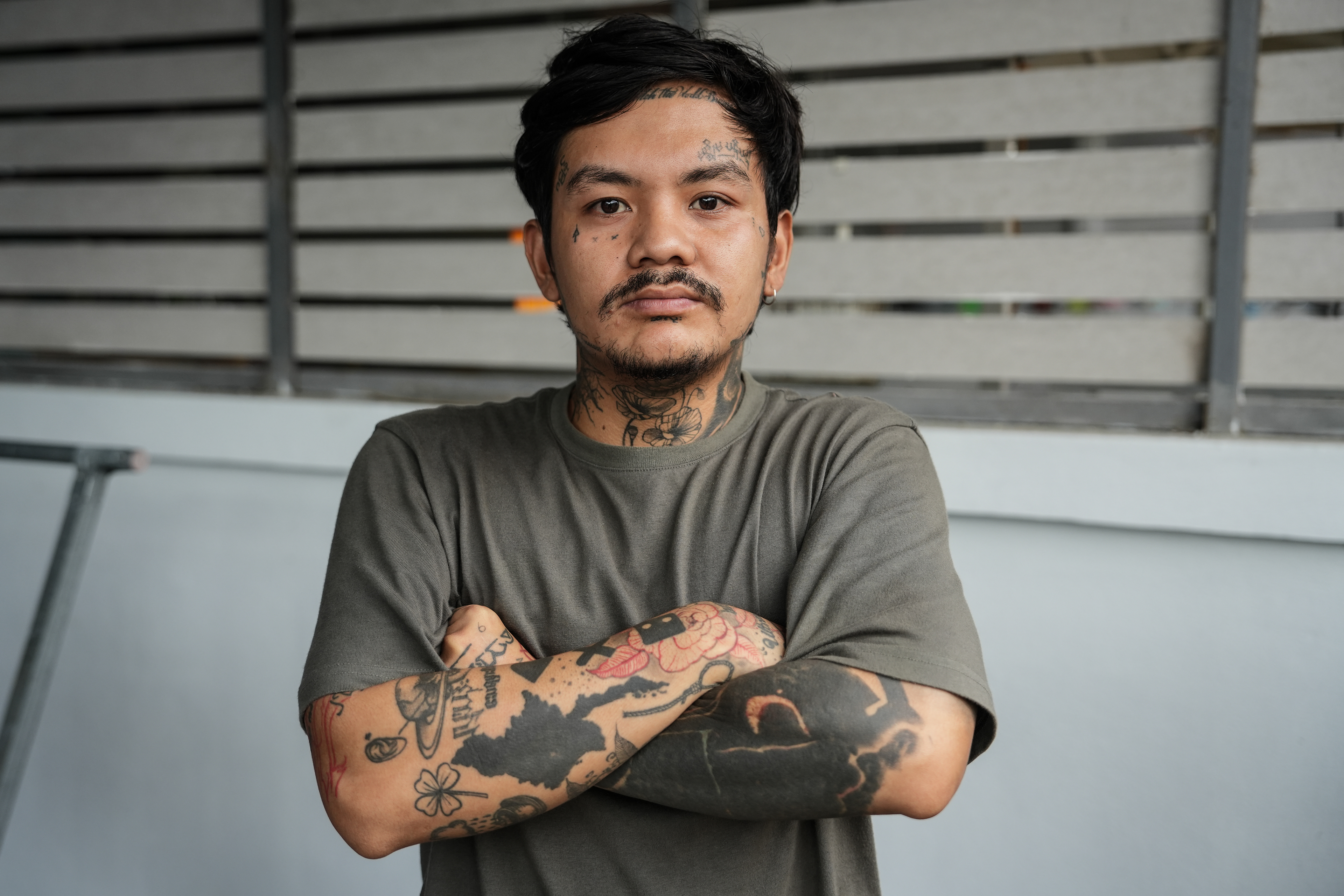
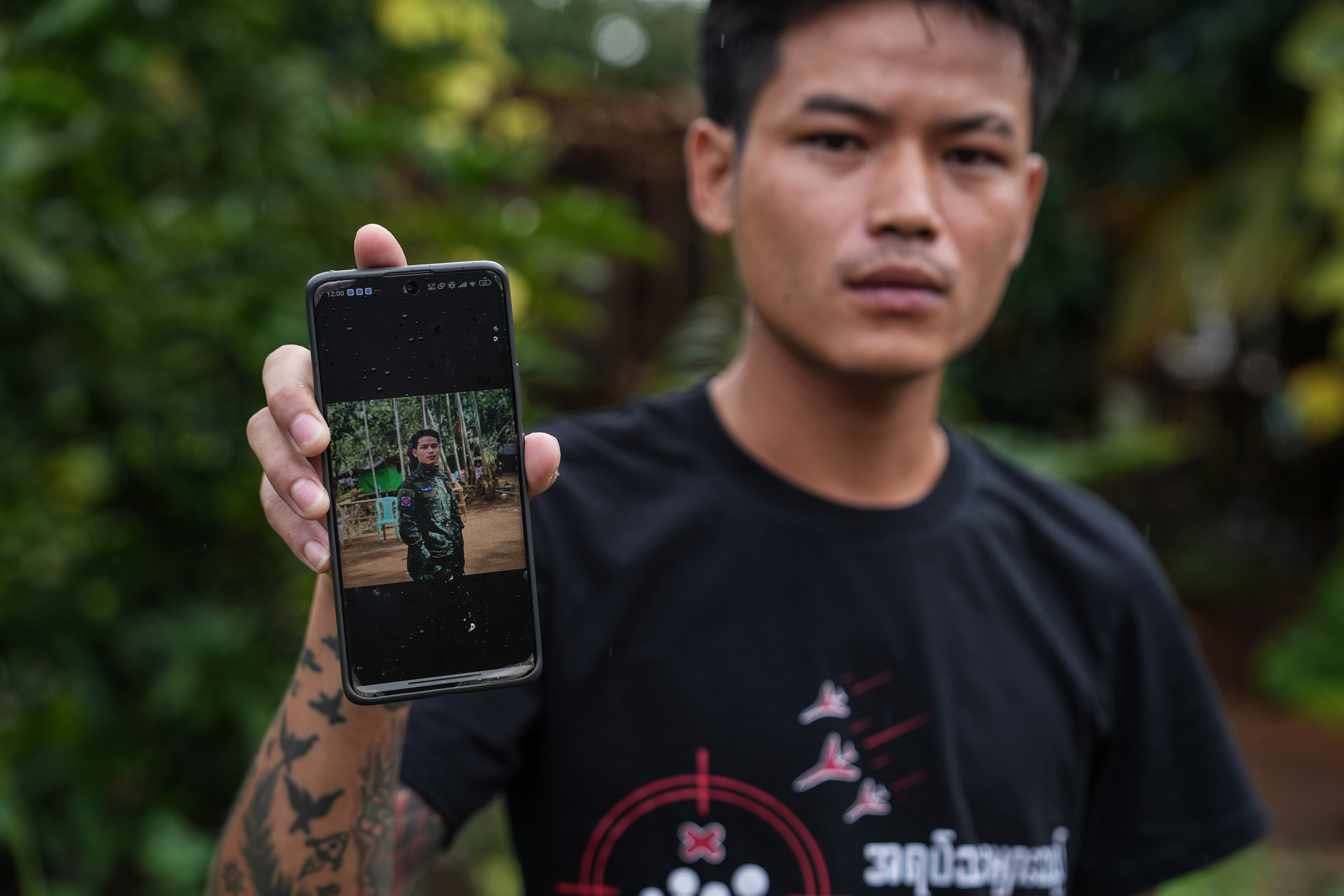
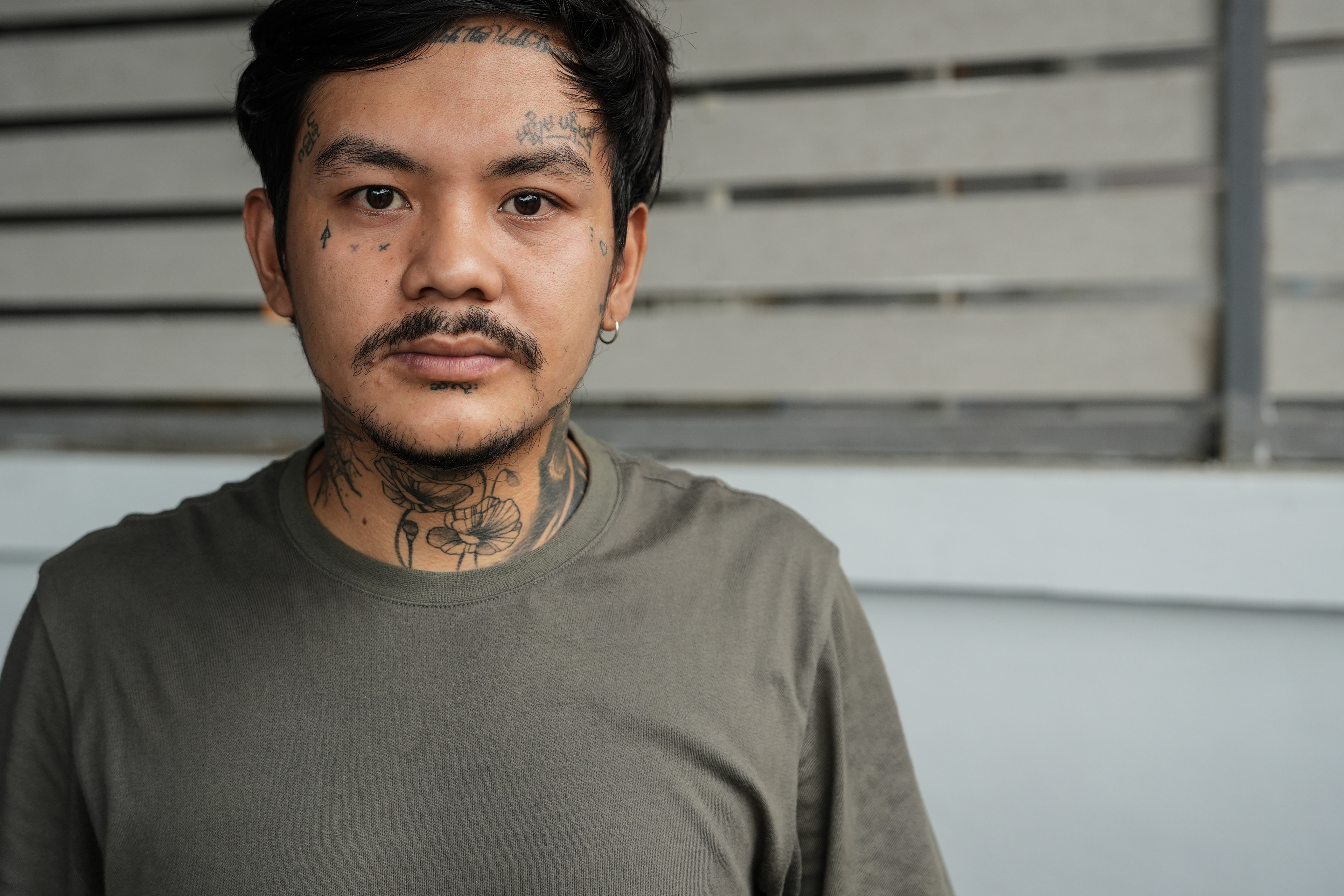
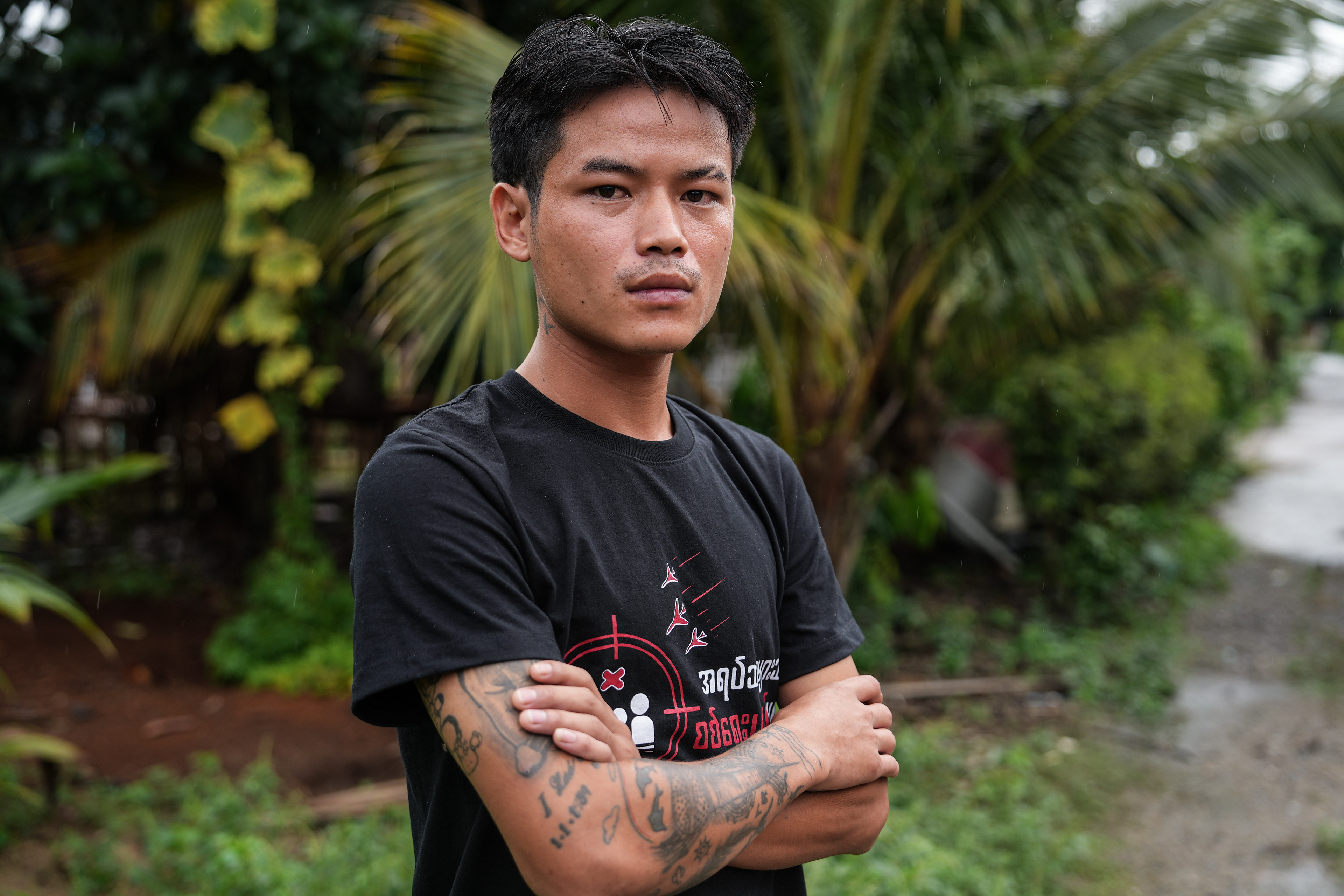
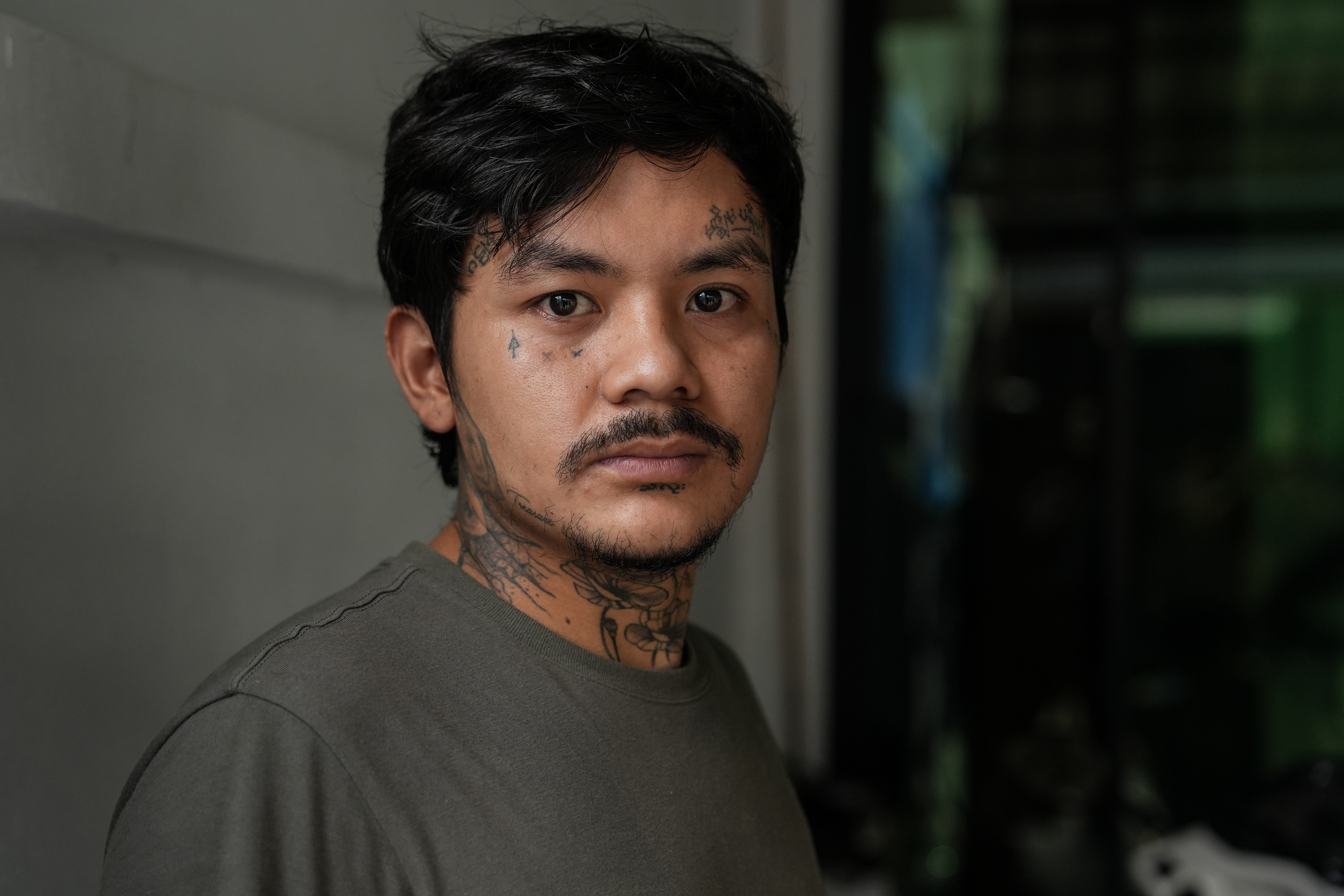
In eastern Myanmar’s Karenni State, the war has shifted again. Fighters like Poe Heart Phyu, 25, stand on frontlines that have changed repeatedly over the past years. There was a time when resistance forces believed they were gaining ground, when advances brought a sense of momentum. But in recent months, the military has pushed back, retaking key positions and forcing fighters to adapt to a war that is turning once again. Poe speaks less about territory than about loss. On his arm, a tattoo of four figures, himself and three close friends, remains a quiet record of what the war has taken. Two of them are now dead. What once marked friendship now carries the weight of absence.
For others, the conflict has taken on new forms. Ko Khant, who once worked in marketing, now pilots improvised drones for resistance forces, part of a shift in how the war is being fought. For a time, these drones offered an advantage, allowing fighters to strike despite limited resources. But the balance is changing. The military has begun deploying signal jamming systems and its own drones, some reportedly supported by China. Across these frontlines, the war is no longer defined by quick victories, but by endurance. It is shaped by those who remain, adapting to a conflict that continues to evolve, even as its human cost becomes more visible.
© Aung Khant Si Thu for SRF News
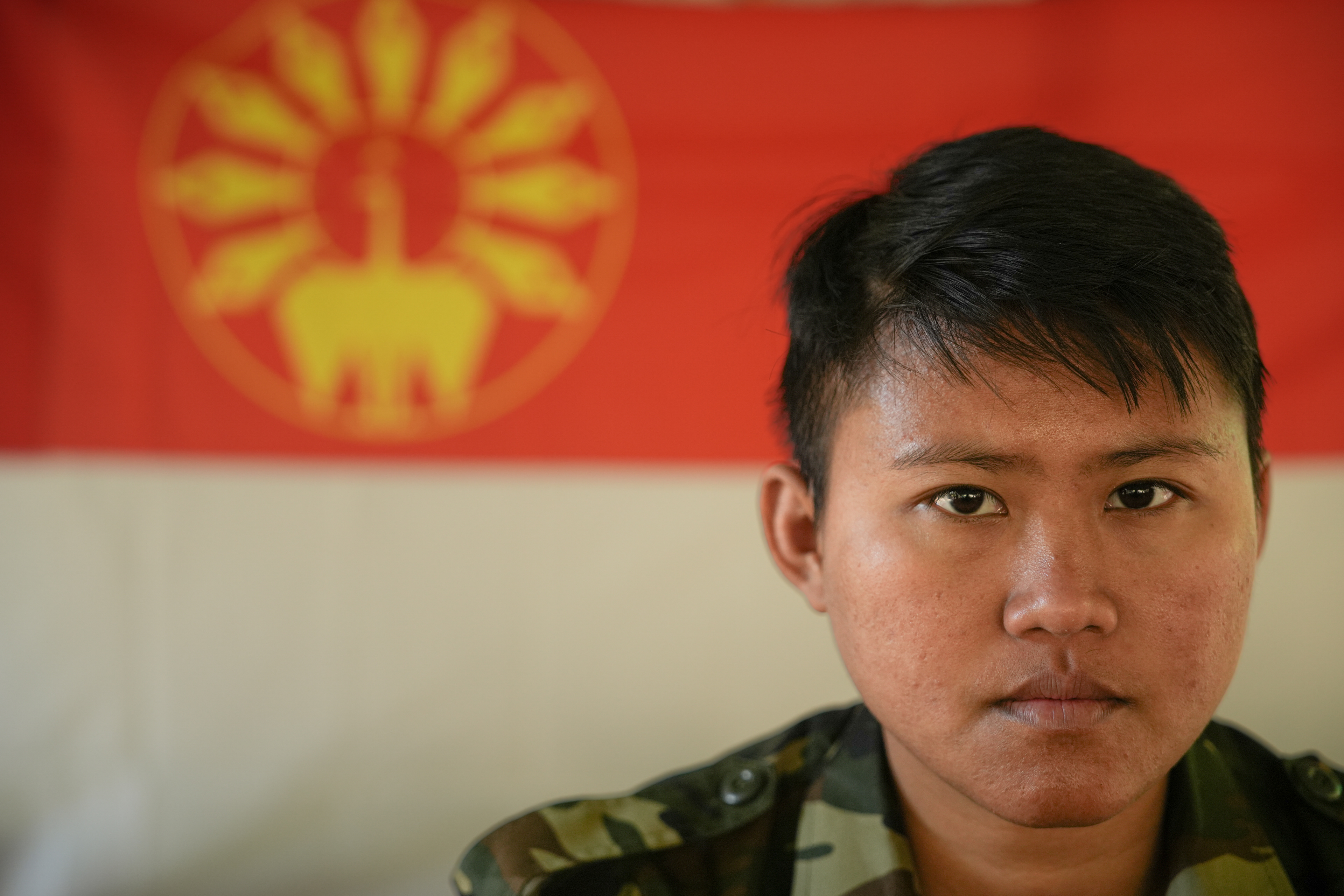
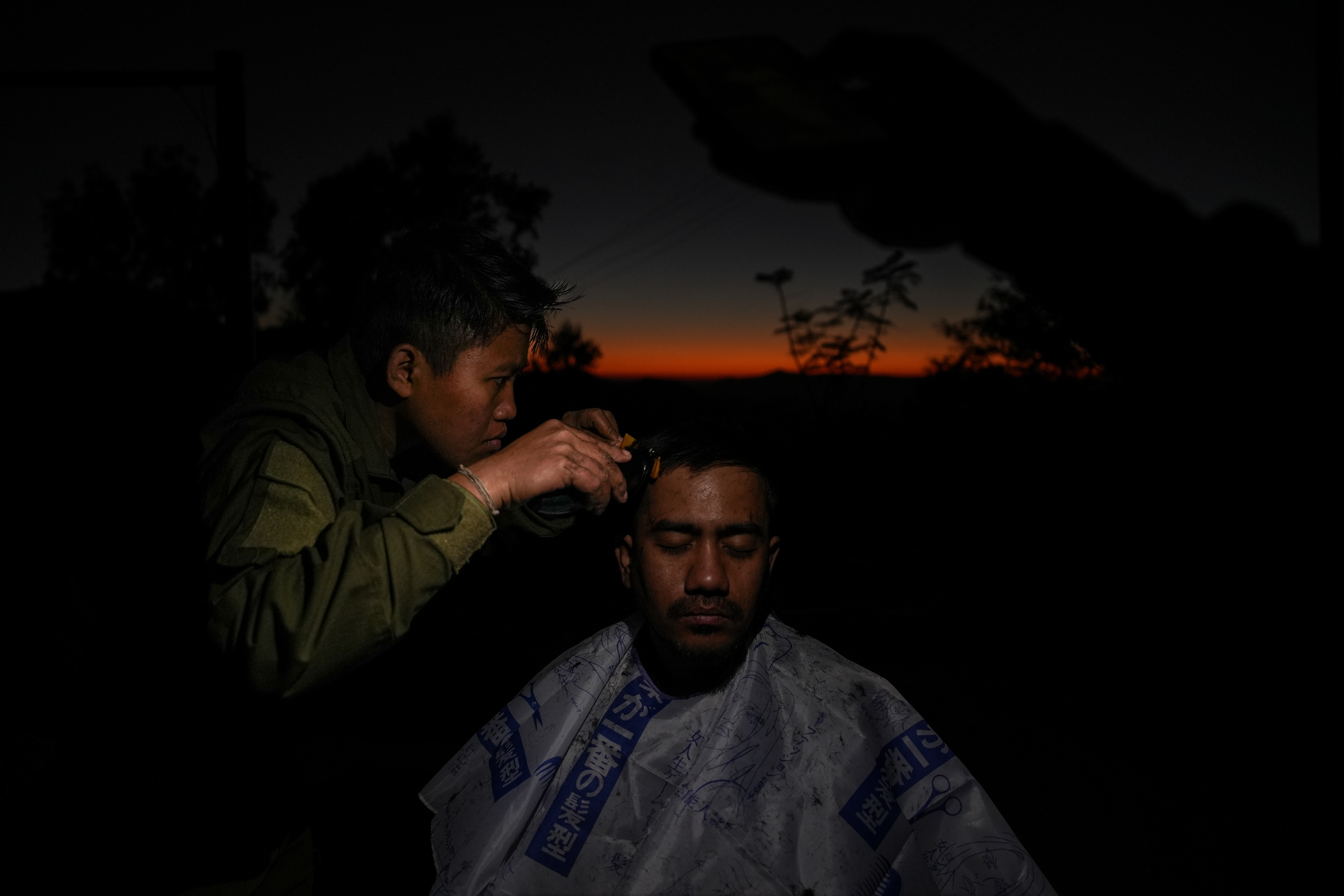
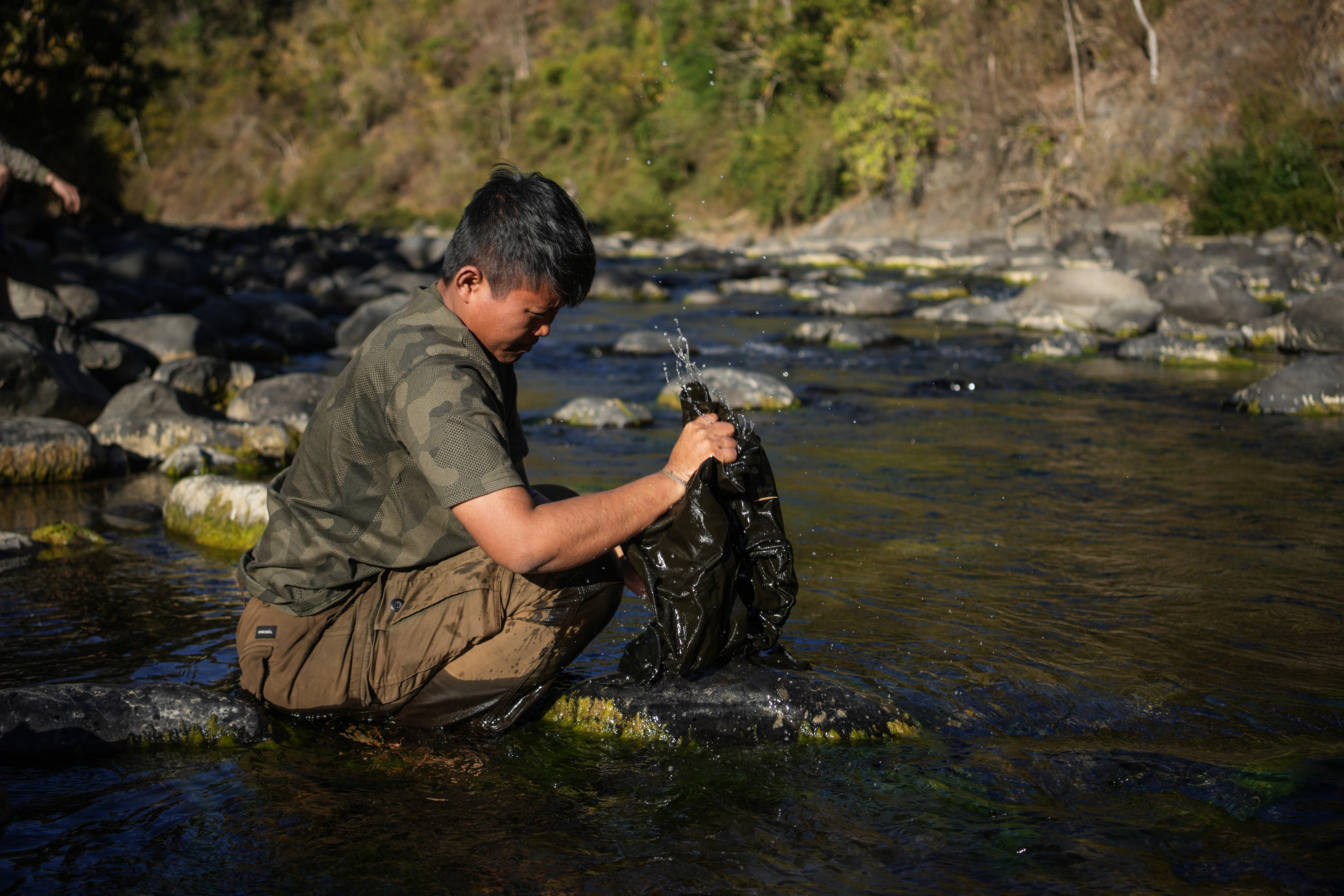
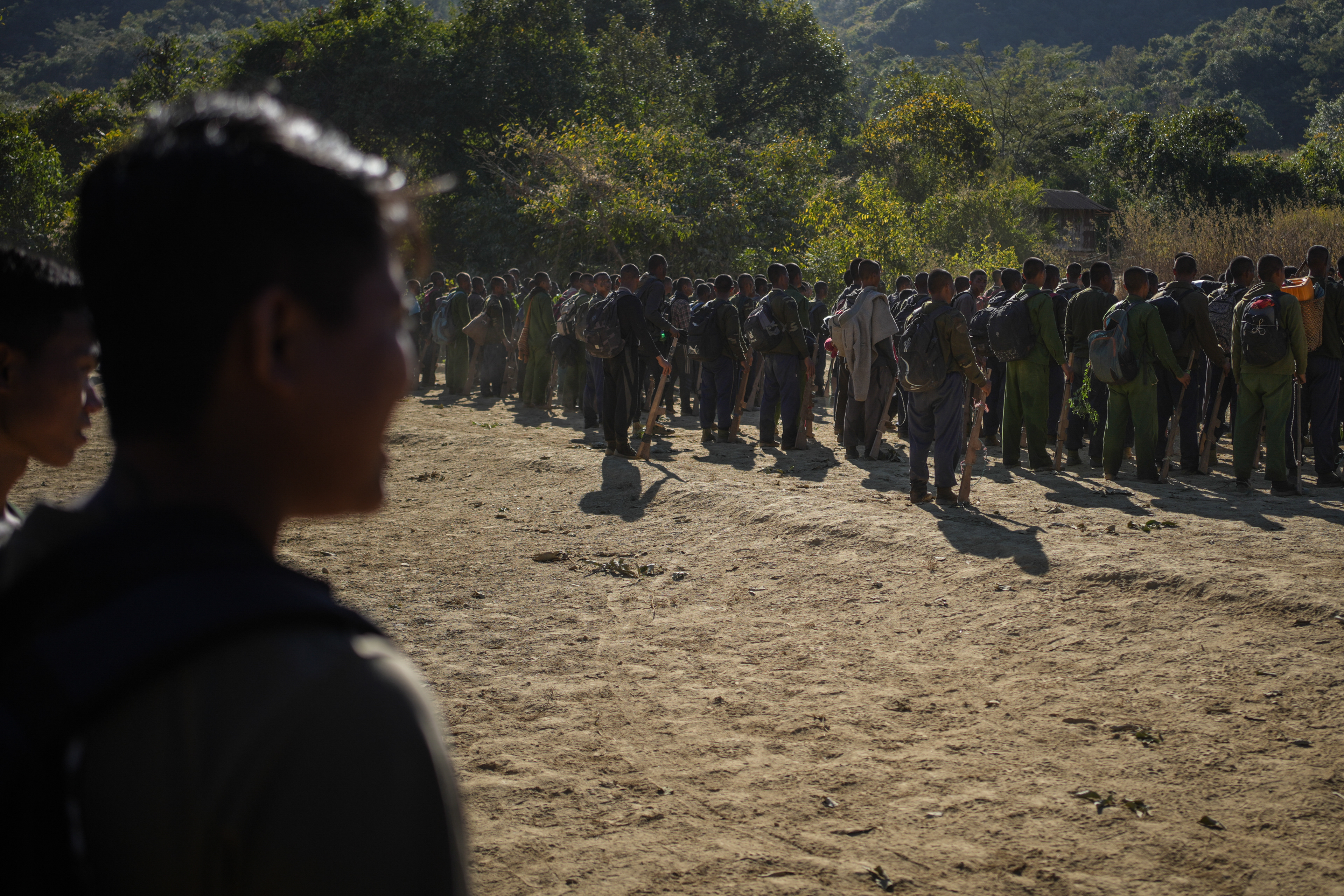
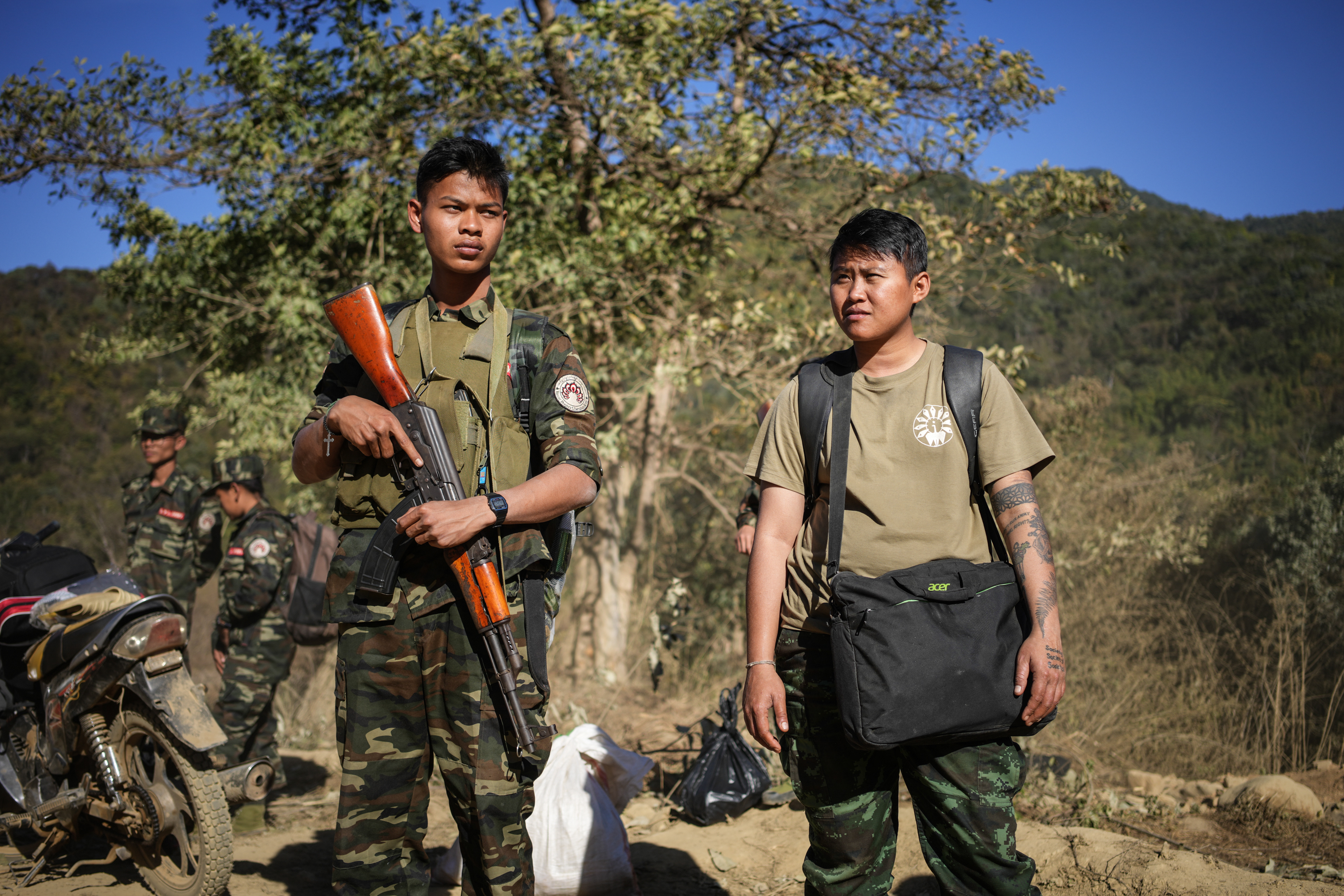
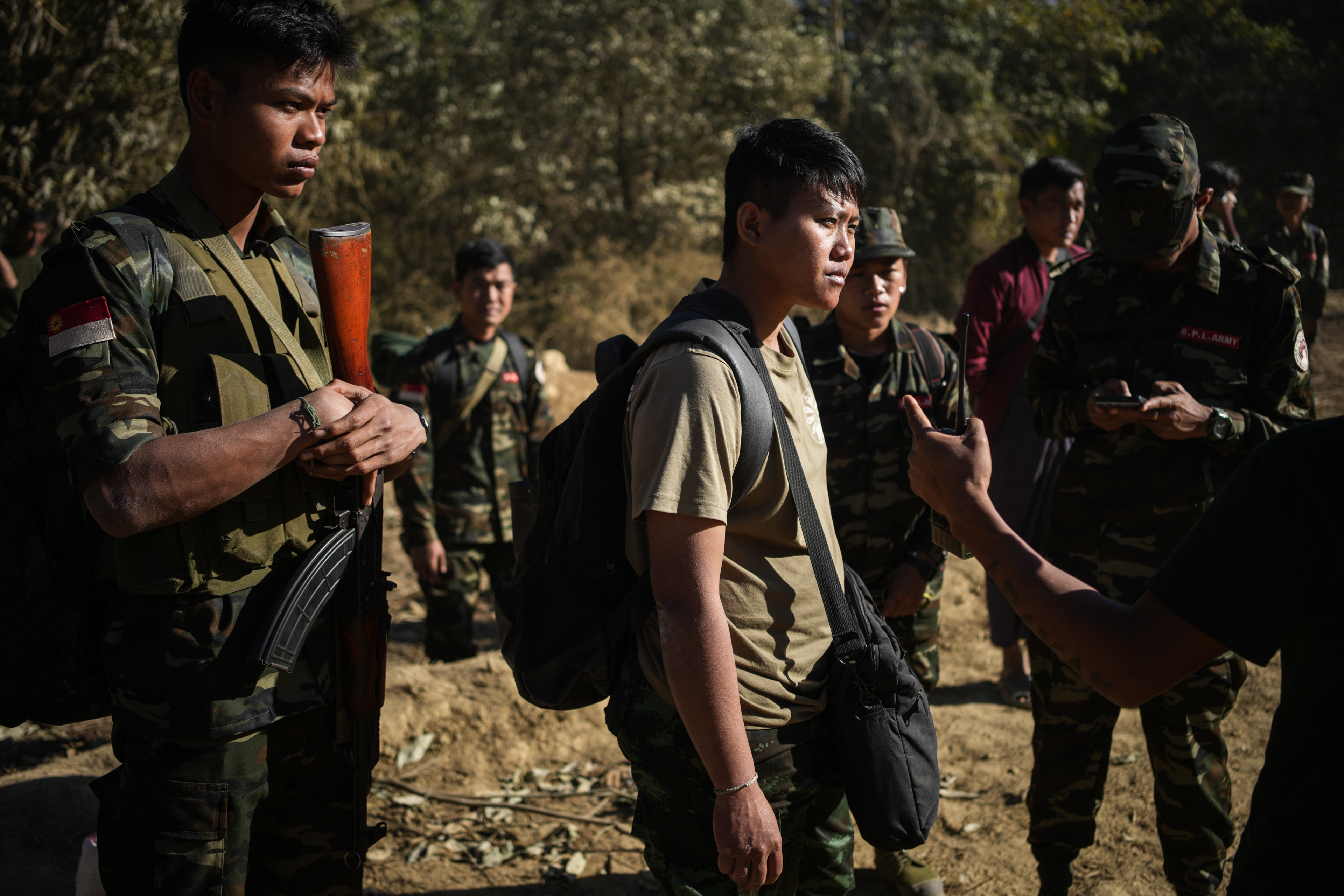
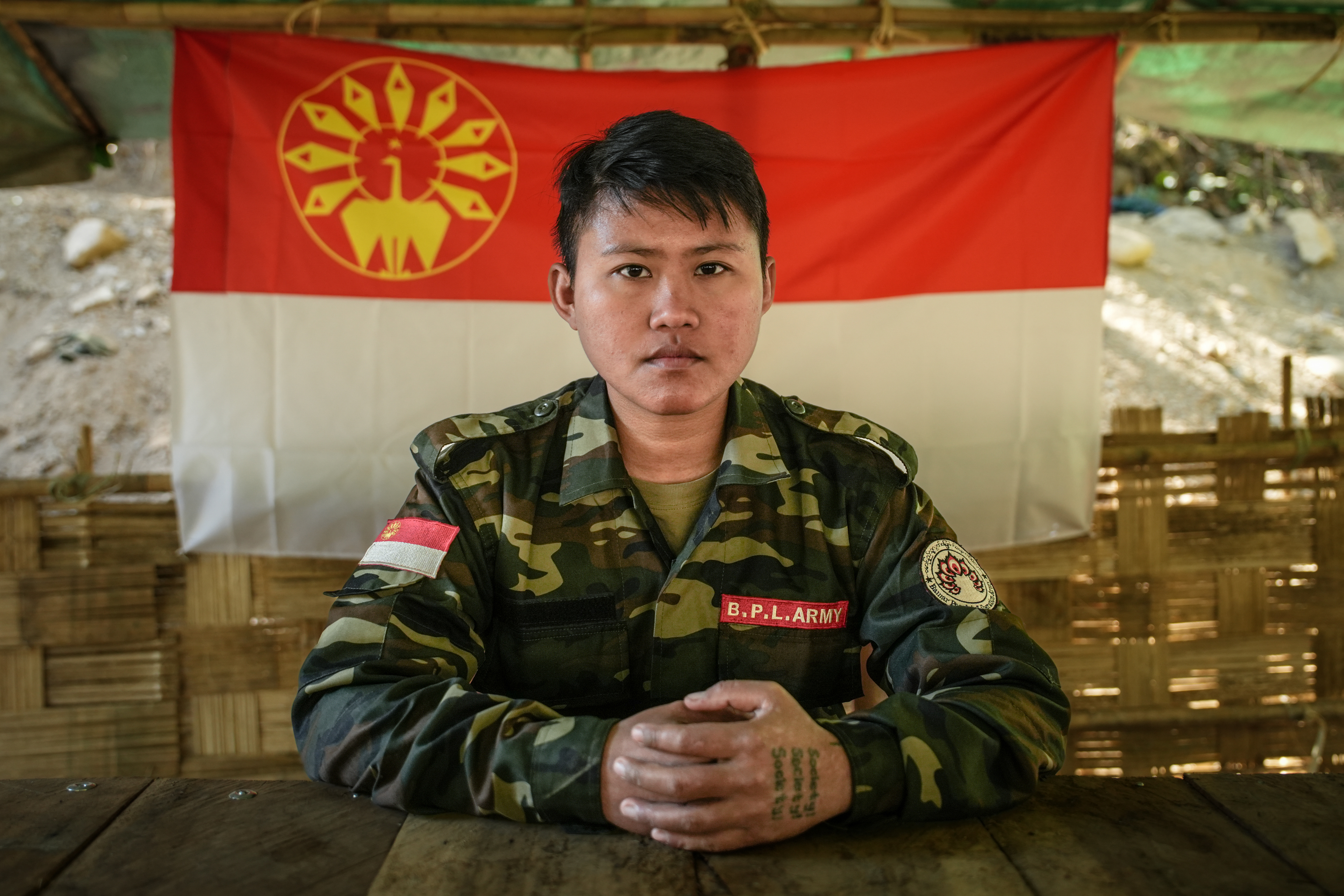
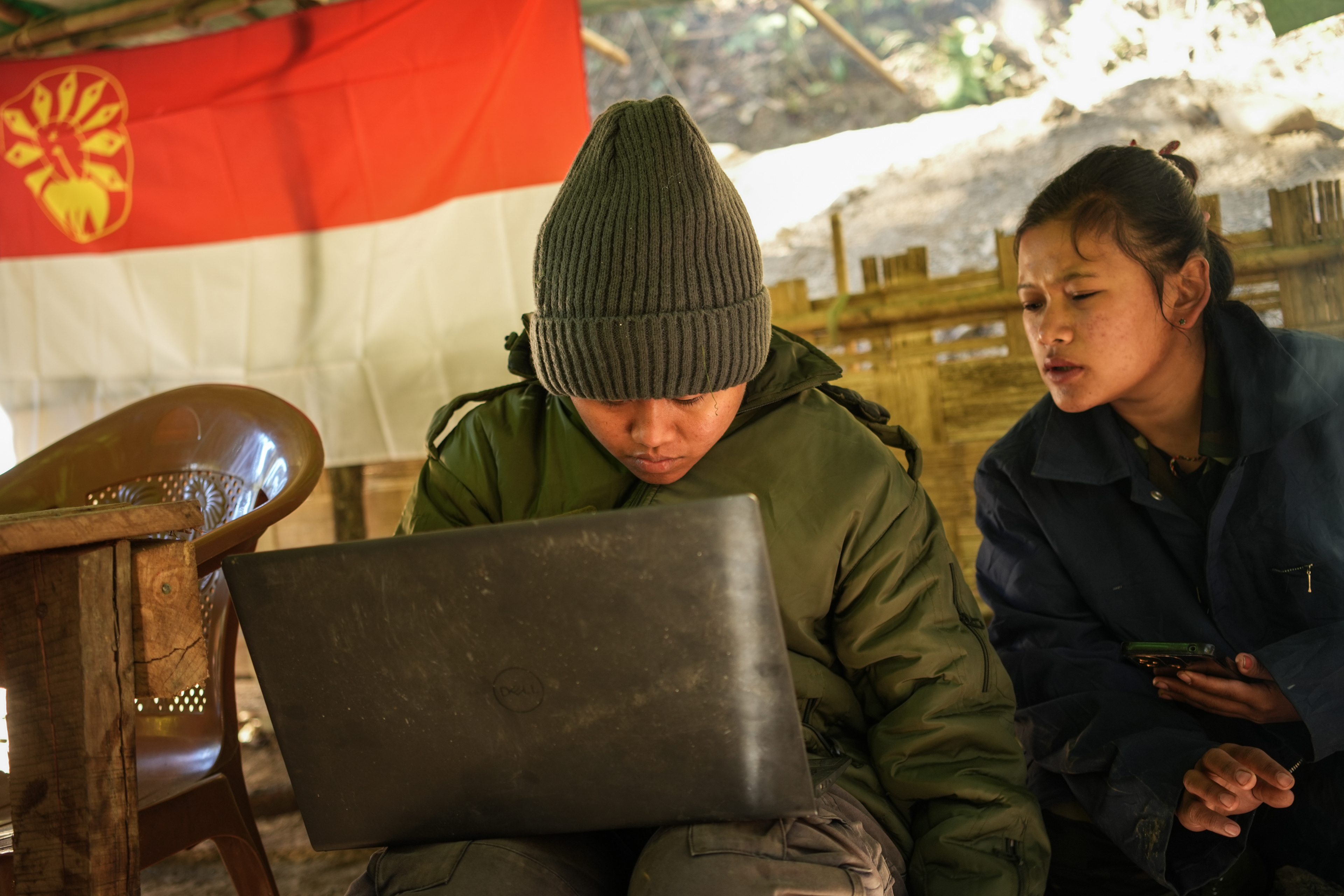
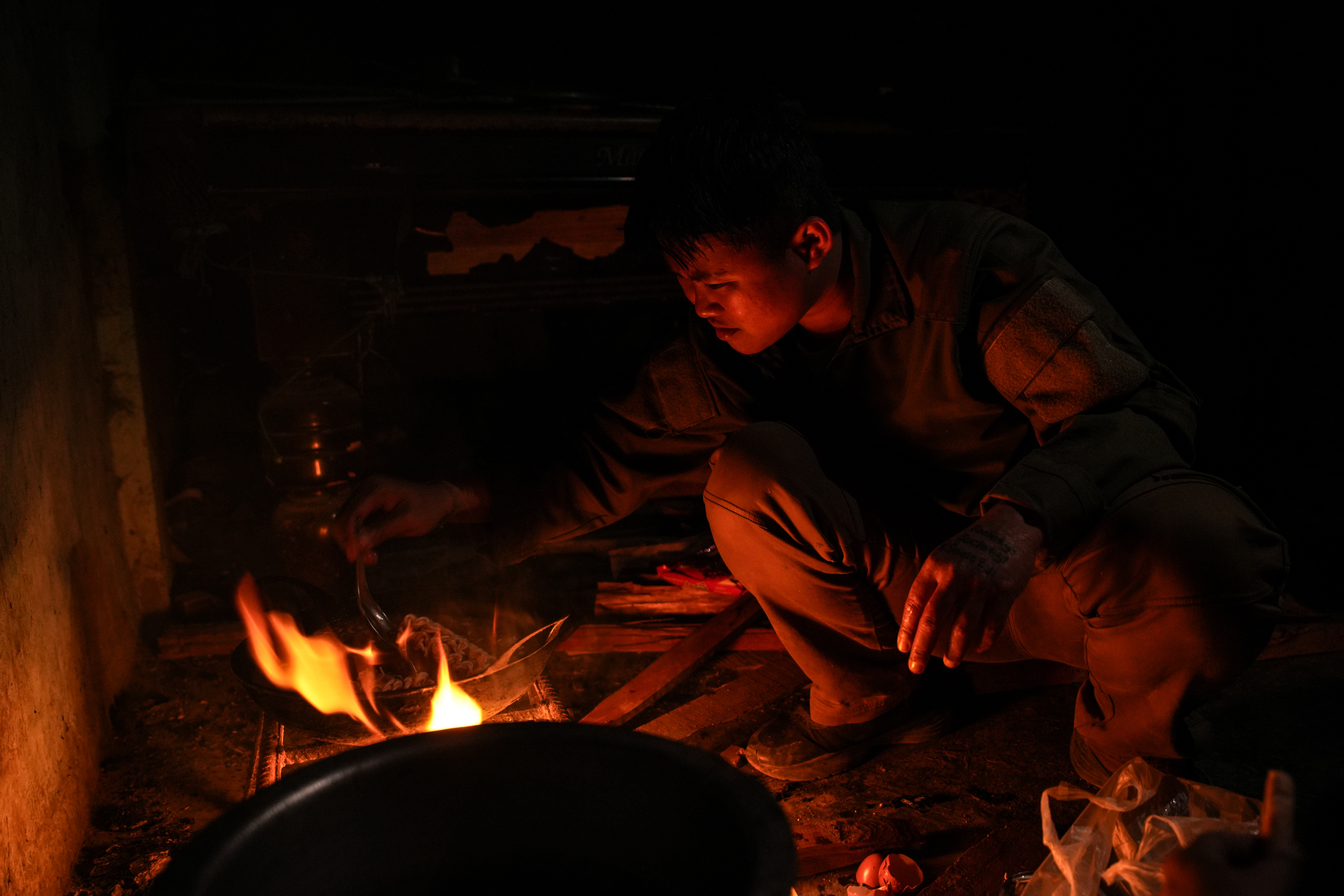
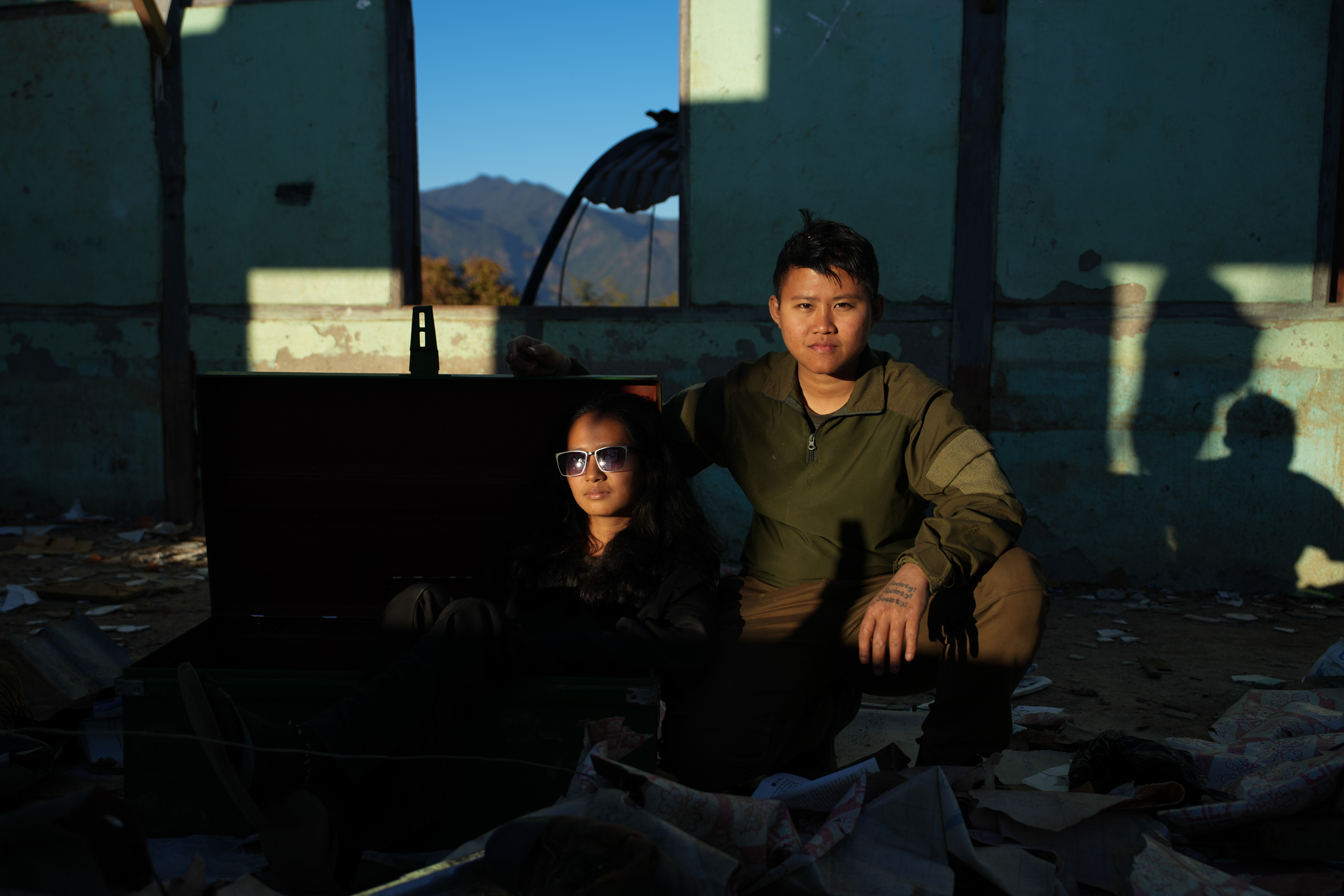
During four years of revolution, I have traveled across Myanmar, meeting young people in the resistance. I’ve listened to their voices in many places, around campfires at night, behind dust-covered vehicles, and on the frontlines. When a friend once asked what I remember most from this time, my answer was simple: the young people. Their determination and courage stand out above everything else.
Among them is “Yoe” (Yoe Aunt Min), known as Sayama Yoe, the Chief Political Officer of the Burma People’s Liberation Army (BPLA) and a leader in central Myanmar. As a lesbian woman, she stands shoulder to shoulder with her comrades, leading political discussions and earning their trust. She is also a poet, someone who speaks strongly against deforestation. Despite everything, she carries a quiet resilience. When I once asked if she ever felt tired, she replied, “There’s no such thing as tiredness, brother. I will keep going until the end.”
Beyond her role in the movement, Yoe is known in camp for cutting hair, for soldiers, visitors, and allies alike. “Brother, your hair is getting long,” she would say, often meaning an unavoidable haircut. She once laughed, recalling how she used to cut her younger siblings’ hair, “They had no choice.” Like many others in the resistance, she dreams of returning home one day, to farm, to live quietly with her family. But for now, she continues. On the fourth anniversary of the coup, this work is in honor of Yoe and countless others like her, young people who carry both the weight of the present and the hope of returning home.
© Aung Khant Si Thu
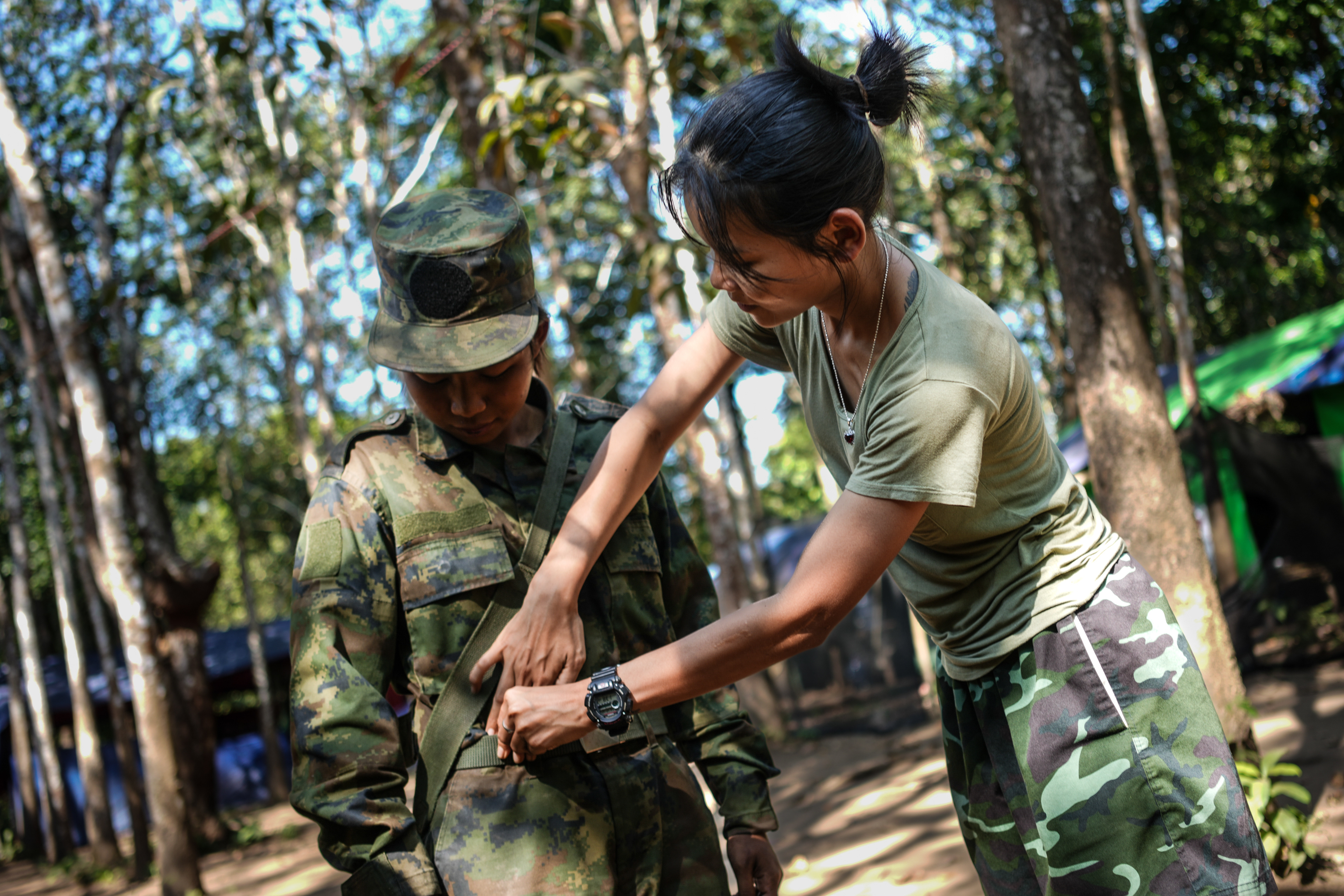
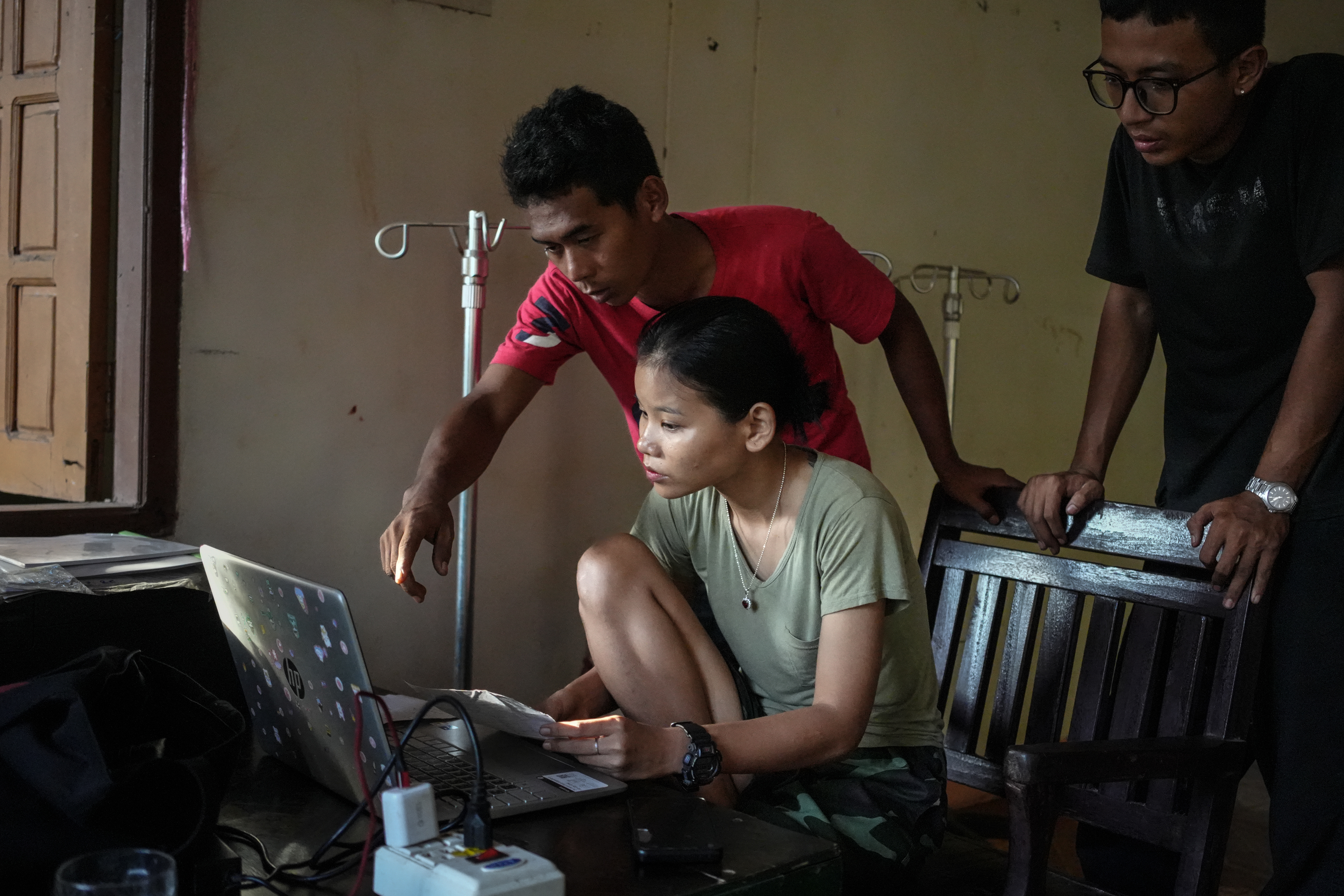
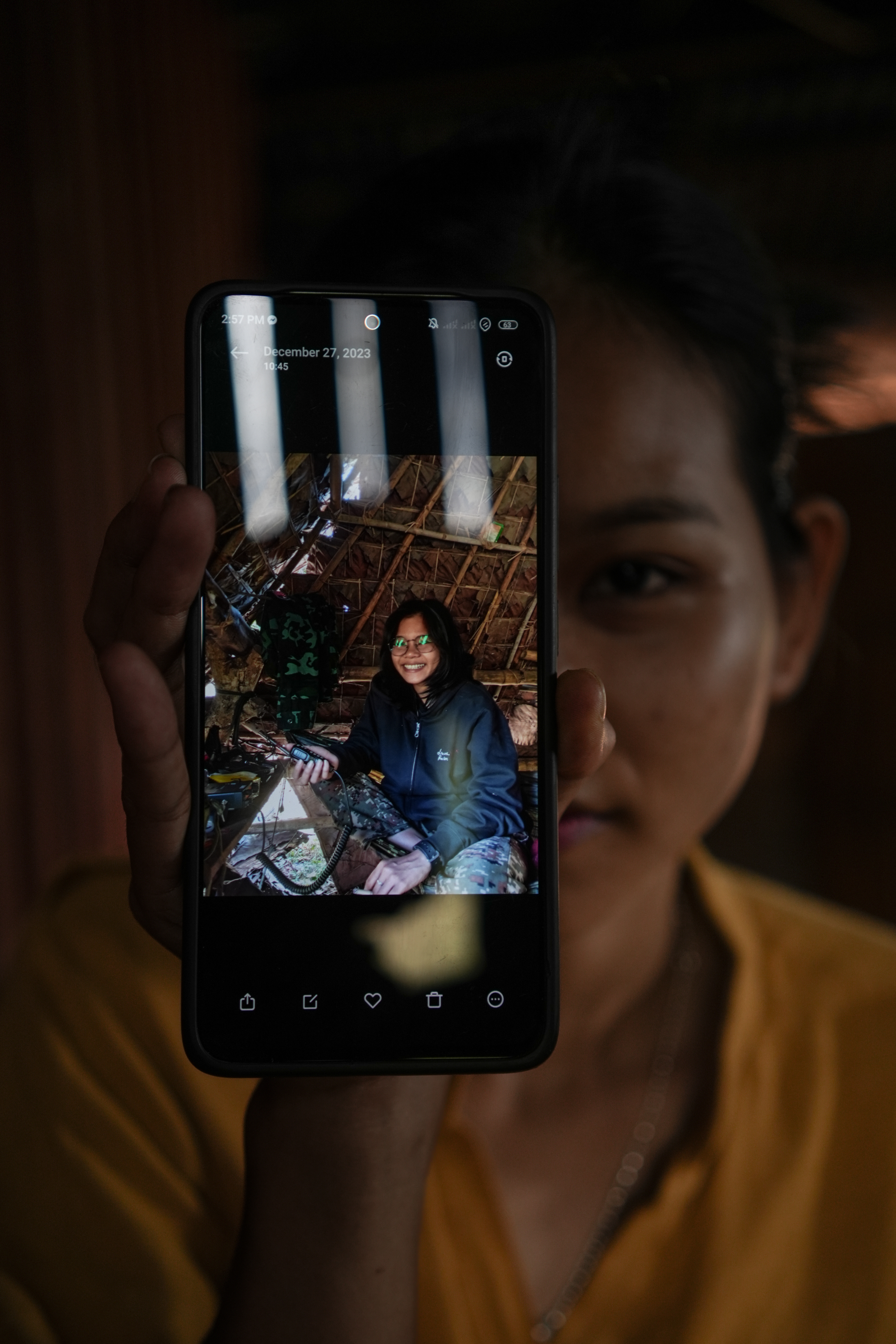
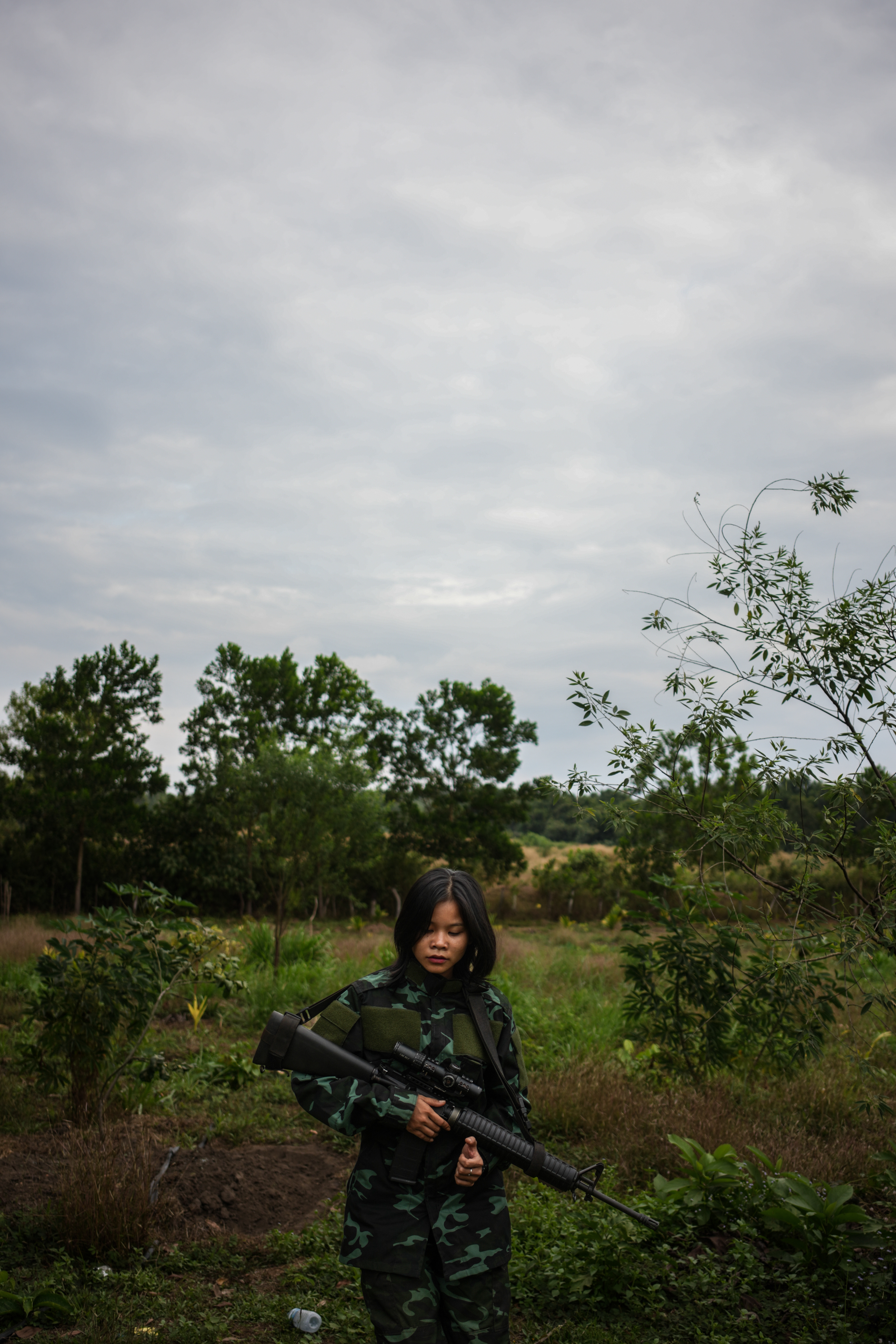
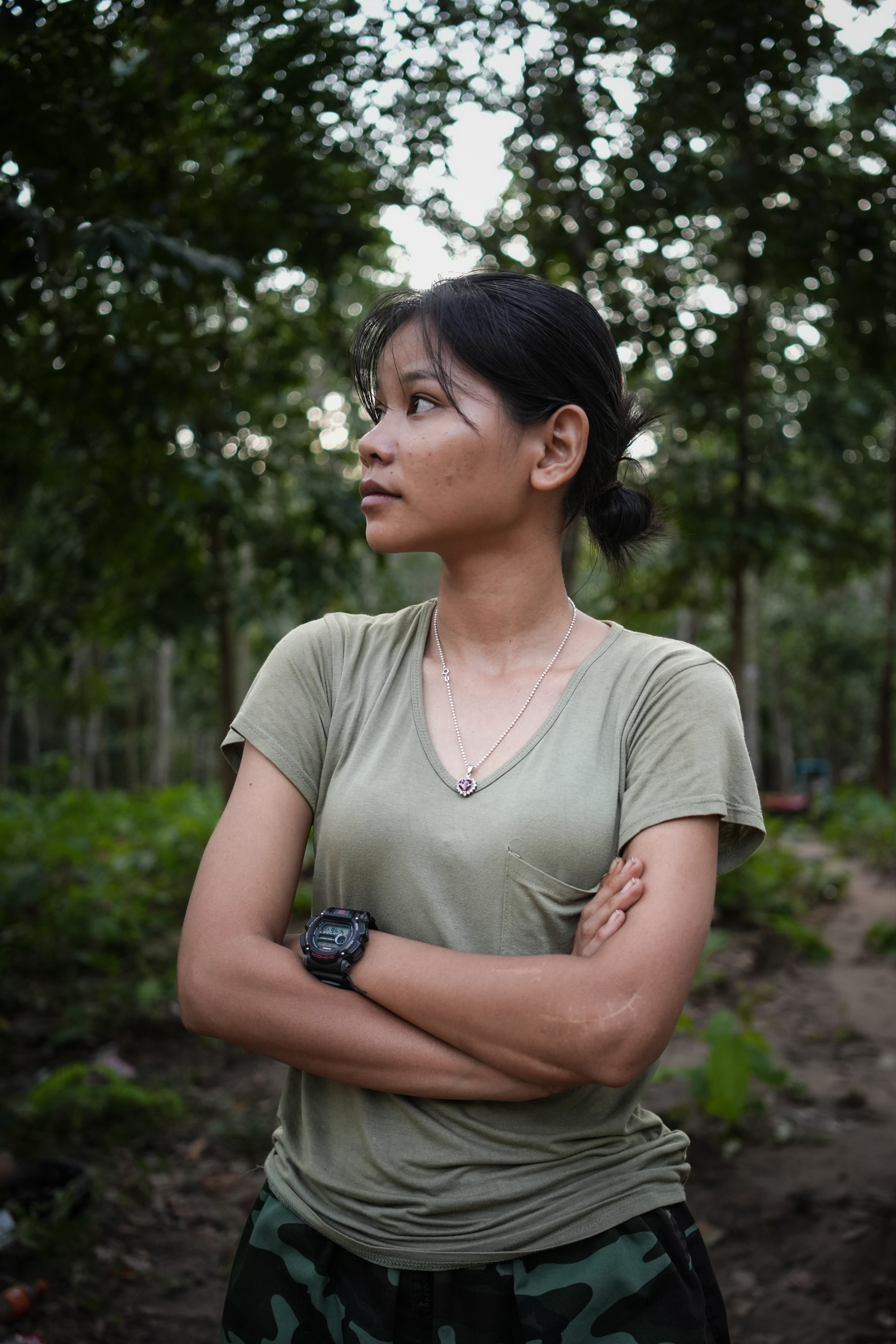
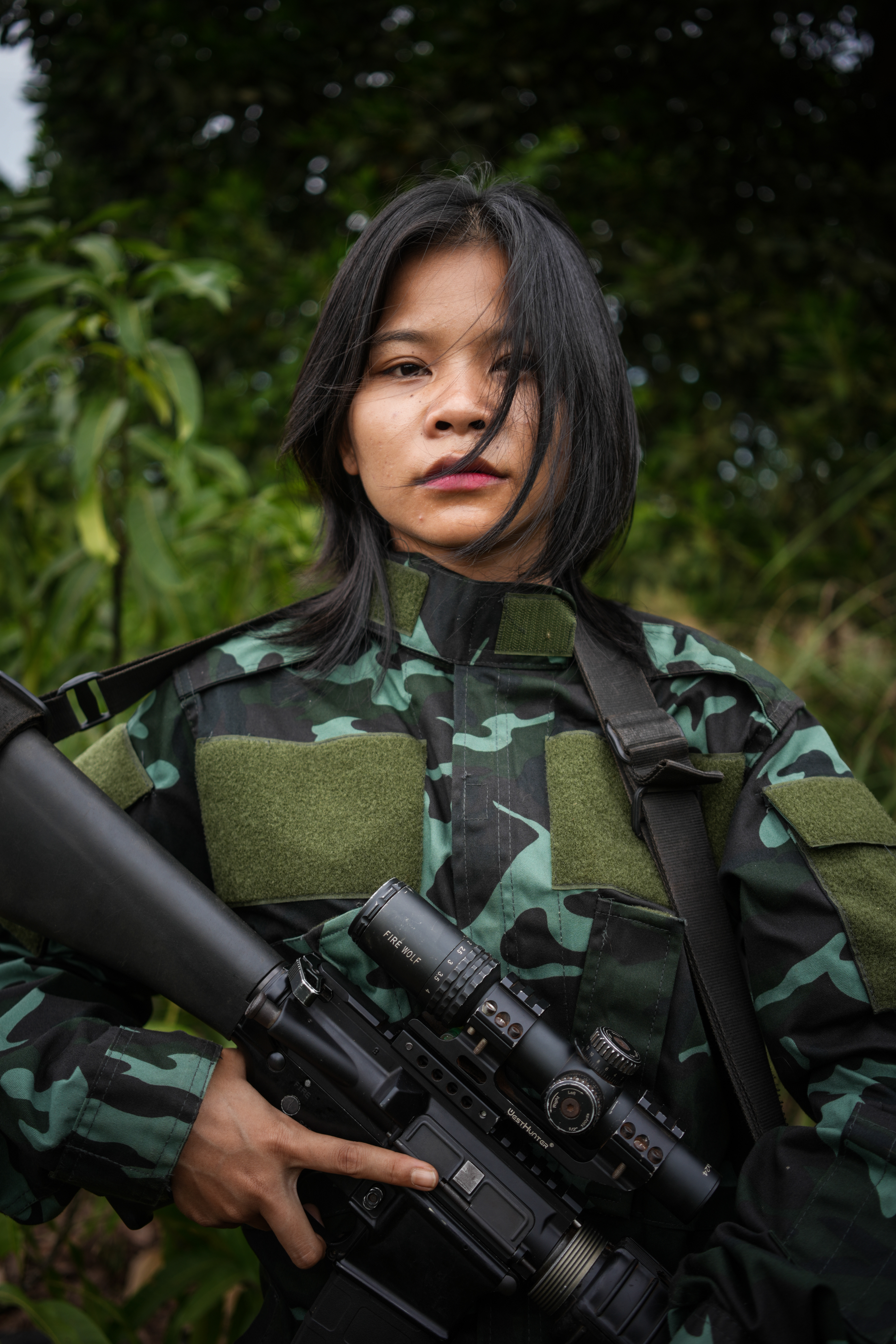
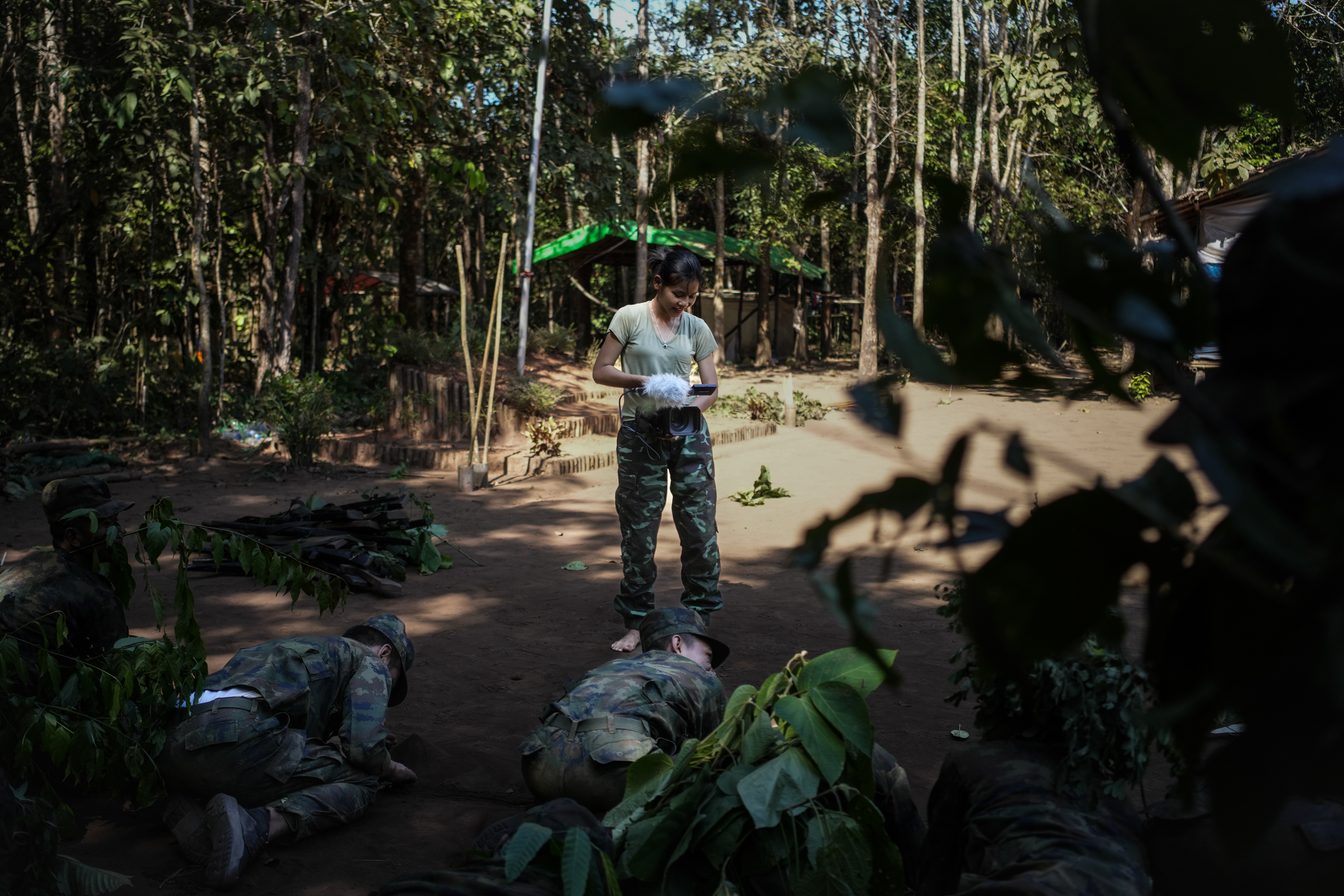
Chi Chi, a 23-year-old Mon-Karen woman raised in Yangon, represents the growing role of women in Myanmar’s ongoing revolution. Before the 2021 military coup, she worked as a preschool teacher, dedicating her time to caring for young children. Her life changed after witnessing the military’s violent crackdown on peaceful protesters, an experience that led her to join the resistance in early 2022.
She later joined the Mon Liberation Army (MLA), receiving training from the Karen National Union (KNU), and began her work as a communications officer on the frontlines, helping relay critical information in conflict areas. Today, she leads the MLA’s media team, documenting and shaping how the resistance is seen and understood, both internally and beyond.
Chi Chi’s journey reflects a broader shift within the movement, where women are stepping into leadership roles as organizers, communicators, and decision-makers. In a society shaped by deep-rooted gender norms, their presence challenges expectations and redefines the image of resistance. Her story speaks to a generation of women who are not only part of the struggle, but actively shaping its direction.
© Aung Khant Si Thu